
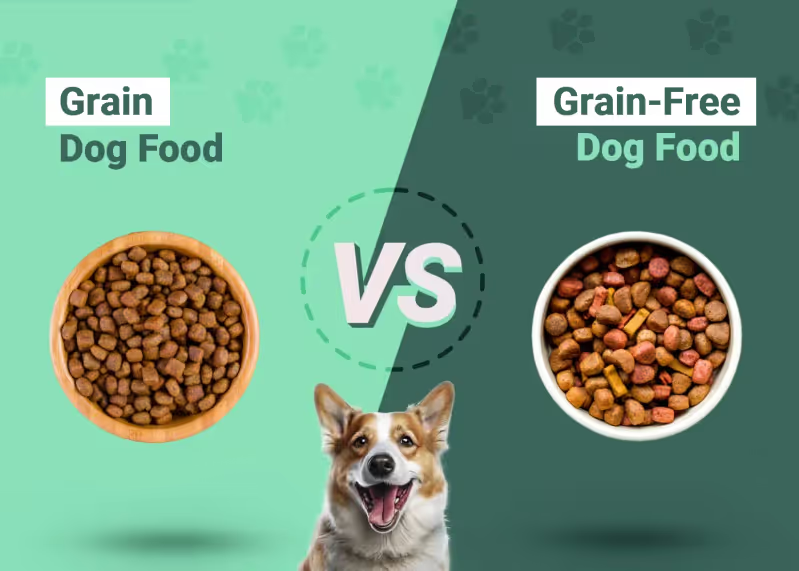

Choosing between grain-free and grain-inclusive dog food can be confusing. Pet food packaging often promotes grain-free recipes as more natural, easier to digest, or better for dogs with allergies. At the same time, veterinary discussions about a possible connection between certain grain-free diets and canine heart disease have made many owners question whether removing grains is actually beneficial.
The truth is more nuanced: grain-free dog food is not automatically healthier, and grain-inclusive dog food is not automatically better. A dog’s nutritional needs, medical history, food sensitivities, activity level, age, and the quality of the complete diet matter much more than whether the label says grain-free.
Grains such as rice, oats, barley, corn, and wheat can provide carbohydrates, fibre, vitamins, and minerals. Grain-free recipes usually replace these ingredients with alternatives such as potatoes, peas, lentils, chickpeas, or tapioca. These substitutions are not necessarily harmful, but they do not automatically make a food more nutritious.
There is also an important scientific question involving canine dilated cardiomyopathy (DCM), a serious heart muscle disease. The US Food and Drug Administration (FDA) has investigated reports of DCM in dogs eating certain diets, many of which were marketed as grain-free and contained substantial amounts of peas, lentils, or other pulses. The FDA has not established that grain-free food itself causes DCM, and reports have also involved some grain-inclusive diets.
This guide compares grain-free and grain-inclusive dog food, explains what veterinary research currently says, explores food allergies and digestion, and provides a practical framework for choosing a nutritionally appropriate diet.
Grain-Free vs Grain-Inclusive Dog Food
What Is Grain-Free Dog Food?
Grain-free dog food is formulated without traditional cereal grains such as wheat, corn, rice, barley, oats, and sorghum.
Instead of these ingredients, manufacturers typically use alternative carbohydrate and fibre sources. Common examples include potatoes, sweet potatoes, peas, lentils, chickpeas, tapioca, and other legumes.
Grain-free food is available in dry kibble, wet food, freeze-dried products, and some specialist formulations. It is often marketed toward owners who want to avoid grains because of concerns about allergies, digestion, or ingredient quality.
However, grain-free does not mean carbohydrate-free. Many grain-free recipes still contain substantial amounts of starch and carbohydrates. For example, a food containing potatoes, peas, and tapioca can still provide considerable carbohydrate energy even though it contains no cereal grains.
It is also important to distinguish grain-free food from gluten-free food. Gluten-free products exclude gluten-containing ingredients, but they may still contain other grains. Conversely, grain-free products exclude all cereal grains, including grains that do not contain gluten.
Table of Contents
Common Ingredients in Grain-Free Dog Food
The ingredients vary between brands and formulations, but common examples include:
- Potatoes and sweet potatoes as carbohydrate sources.
- Peas, chickpeas, and lentils as sources of starch, fibre, and plant protein.
- Tapioca or cassava as a source of starch.
- Animal proteins such as chicken, beef, fish, turkey, or lamb.
- Added fats, vitamins, minerals, and other ingredients needed to complete the nutritional profile.
The presence of these ingredients does not automatically determine whether a food is good or bad. Their nutritional contribution, digestibility, proportions, processing, and interaction with the rest of the recipe all matter.
What Is Grain-Inclusive Dog Food?
Grain-inclusive dog food contains one or more cereal grains as part of its formulation. These may include rice, corn, wheat, oats, barley, and sorghum.
Grains can provide energy, dietary fibre, essential nutrients, and different types of carbohydrates. Depending on the grain and how it is processed, they may also contribute protein and other nutrients.
Whole grains are not simply empty fillers. For example, oats can provide soluble fibre, while some whole-grain ingredients contribute B vitamins, minerals, and other nutrients.
Grain-inclusive foods can be formulated for puppies, adult dogs, senior dogs, and dogs with specific nutritional needs. Their suitability depends on the complete recipe rather than the presence of grains alone.
Common Ingredients in Grain-Inclusive Dog Food
| Grain | Potential nutritional contribution |
| Rice | Digestible carbohydrate and energy |
| Oats | Carbohydrates and dietary fibre |
| Barley | Carbohydrates and soluble fibre |
| Corn | Energy, carbohydrates, and some protein |
| Wheat | Carbohydrates, protein, and nutrients |
| Sorghum | Carbohydrates and other nutrients |
The nutritional value of each ingredient depends on its form, processing, quantity, and the overall formulation.
For example, a grain-inclusive recipe containing appropriately processed rice and oats may be suitable for many dogs. However, simply seeing whole grains on a label does not prove that the finished product is nutritionally superior.
The same principle applies to grain-free recipes: attractive ingredient names cannot replace evidence of nutritional adequacy and manufacturing quality.
Grain-Free vs. Grain-Inclusive Dog Food: Key Differences
Both types of food can provide complete and balanced nutrition when properly formulated. Their main difference is the carbohydrate and fibre ingredients used in the recipe.
| Comparison factor | Grain-free dog food | Grain-inclusive dog food |
| Cereal grains | Excluded | Included |
| Common carbohydrate sources | Potatoes, peas, lentils, tapioca | Rice, oats, corn, wheat, barley |
| Protein sources | Animal and sometimes plant proteins | Animal and sometimes plant proteins |
| Carbohydrate content | Can be high or moderate | Can be high or moderate |
| Fibre sources | Legumes, vegetables, alternative fibres | Grains, vegetables, added fibres |
| Food allergy suitability | Depends on the actual allergens excluded | Depends on the actual allergens excluded |
| DCM research concern | Some formulations have been investigated | Some grain-inclusive formulations have also appeared in reports |
| Nutritional suitability | Depends on complete formulation | Depends on complete formulation |
Neither category guarantees better digestion, fewer allergies, superior protein quality, or improved long-term health.
The best choice is a food that meets the dog’s nutritional requirements, is appropriate for its life stage, is manufactured with reliable quality controls, and is suitable for its individual health needs.
Are Grains Bad for Dogs?
One of the most common misconceptions in pet nutrition is that dogs cannot digest grains or that grains provide no meaningful nutritional value.
This is not supported by veterinary nutrition evidence.
Dogs can digest and use nutrients from appropriately processed grains. Their digestive systems are adapted to a varied diet, and commercial dog foods can include grains as useful sources of energy and nutrients.
The veterinary nutrition team at Tufts University’s Cummings School of Veterinary Medicine explains that most dogs efficiently digest and utilise nutrients from grains. It also notes that whole grains can contribute vitamins, minerals, essential fatty acids, and fibre.
Grains can therefore form part of a nutritionally balanced canine diet.
Are Grains Just Fillers in Dog Food?
The word “filler” is often used in pet food marketing to suggest that grains have little nutritional value. However, this term does not adequately describe the role of ingredients in a formulated diet.
An ingredient should be assessed according to the nutrients it contributes, how well the dog can digest it, and how it fits into the complete recipe.
For example, rice can provide digestible energy, oats can contribute fibre, and corn can provide carbohydrates and other nutrients.
A food containing grains is not automatically low quality. Equally, a grain-free recipe is not automatically high quality simply because it excludes cereal grains.
The more useful question is whether the complete food provides appropriate amounts and ratios of essential nutrients.
Can Dogs Be Allergic to Grains?
Yes, dogs can develop food allergies involving certain grains. However, a grain allergy should not be assumed whenever a dog experiences itching, ear infections, vomiting, or diarrhoea.
Food allergies can involve different dietary ingredients, including animal proteins and carbohydrate sources.
Commonly investigated food allergens in dogs include beef, dairy products, chicken, and other proteins. Wheat and other plant ingredients can also trigger reactions in some individuals.
The veterinary nutrition service at Tufts notes that allergies to grains are not more common than allergies to animal proteins. Therefore, automatically removing all grains is not a reliable way to identify or treat a suspected food allergy.
Common Symptoms of Food Allergies in Dogs
Food-related allergic reactions may involve the skin, ears, and digestive system.
Potential signs include:
- Persistent itching, particularly around the paws, face, ears, and abdomen.
- Recurrent ear infections.
- Red or irritated skin.
- Excessive licking or chewing of the paws.
- Repeated skin infections.
- Vomiting or diarrhoea in some affected dogs.
These symptoms are not specific to food allergies. Fleas, environmental allergens, infections, parasites, and other medical conditions can cause similar problems.
A veterinary examination is important before changing a dog’s diet repeatedly.
How Are Food Allergies Diagnosed?
The most reliable method for diagnosing a suspected food allergy is a properly supervised elimination diet trial.
The veterinarian first reviews the dog’s dietary history, including previous foods, treats, supplements, flavoured medicines, and table scraps.
A suitable trial diet may be a veterinary hydrolysed-protein food or a carefully selected novel-protein diet. A hydrolysed diet contains proteins broken into smaller components to reduce the likelihood of an immune reaction.
The dog must eat the prescribed diet exclusively during the trial. Even small amounts of treats, flavoured chews, table food, or other pet food can interfere with the results.
UC Davis School of Veterinary Medicine describes elimination diet trials lasting approximately 8–12 weeks in its guidance on food allergies. After improvement, a veterinarian may recommend a controlled food challenge to help confirm the diagnosis.
This is important because a dog that improves after changing food has not necessarily proved that grains were the problem. The improvement may be related to removing an animal protein, changing another ingredient, or addressing a separate dietary issue.
Grain-Free Dog Food and Canine Dilated Cardiomyopathy (DCM)
One of the most important considerations in the grain-free versus grain-inclusive discussion is canine dilated cardiomyopathy.
DCM is a disease affecting the heart muscle. The heart becomes enlarged and weakened, which can reduce its ability to pump blood effectively. Some dogs with DCM develop congestive heart failure or potentially life-threatening heart rhythm abnormalities.
The disease can have genetic causes, but veterinarians and researchers have also investigated cases that may involve nutritional factors.
Why Did the FDA Investigate Certain Grain-Free Dog Foods?
In July 2018, the US Food and Drug Administration announced an investigation into reports of canine DCM involving dogs eating certain commercial diets.
Many of the reported foods were marketed as grain-free and contained high proportions of peas, lentils, other legume seeds, or potatoes among their main ingredients.
The investigation attracted attention because some affected dogs belonged to breeds not traditionally considered genetically predisposed to DCM.
The FDA subsequently investigated possible relationships involving diet composition, ingredient combinations, nutrient availability, and other factors.
Importantly, the FDA has not established that grain-free food itself causes DCM.
Are Peas and Lentils Dangerous for Dogs?
Peas and lentils are not inherently toxic to dogs. They have been used in pet foods for many years and can provide nutrients, including carbohydrates, fibre, and plant protein.
The concern relates to certain diet formulations and the possibility that ingredient combinations, nutrient availability, or other dietary factors could be associated with heart disease in some dogs.
The FDA has specifically noted that many diets associated with reported non-hereditary DCM contained non-soy legumes or pulses high in their ingredient lists. It has also reported that cases have involved both grain-free and grain-containing foods.
This distinction matters. It would be inaccurate to conclude that every food containing peas or lentils is dangerous, or that every grain-free food causes heart disease.
The FDA’s public update dated December 23, 2022, stated that it did not intend to release further public updates until meaningful new scientific information became available. It also explained that adverse-event reports alone cannot establish a causal relationship.
The FDA continues to encourage pet owners to discuss diet choices with their veterinarians.
What Does More Recent Research Say?
A study published in the Journal of Animal Science in July 2025 examined the effects of four different carbohydrate-source formulations on cardiac function and health indicators in 60 healthy adult dogs over 18 months.
The diets included:
- A grain-free diet containing peas and potatoes.
- A grain-inclusive diet containing peas and pea fibre.
- A grain-inclusive diet without peas or potatoes.
- A grain-free diet containing potatoes.
Researchers monitored echocardiographic measurements, taurine status, and cardiac biomarkers.
The study reported no clinically significant changes in cardiac biomarkers and no clinically meaningful differences indicating DCM among the diet groups. Taurine measurements remained within normal ranges.
However, the study had important limitations. It involved 60 healthy adult dogs, lasted 18 months, and was conducted with participation from researchers employed by or affiliated with Hill’s Pet Nutrition. It cannot establish that every commercial grain-free formulation is safe for every dog or settle all questions about long-term dietary risk.
The study does reinforce an important point: nutritional adequacy and the overall formulation matter more than a simple grain-free or grain-inclusive label.
Should Dog Owners Avoid Grain-Free Food Because of DCM?
The available evidence does not support a claim that all grain-free diets cause DCM. However, there is also no general health benefit that justifies choosing grain-free food for every dog.
For a healthy dog without a diagnosed reason to avoid grains, it is reasonable to consider a well-established, nutritionally complete grain-inclusive food.
If a dog is already eating a grain-free diet, do not panic or make an abrupt change based on marketing claims or online discussions. Review the food’s full formulation with a veterinarian, particularly if peas, lentils, chickpeas, or potatoes are prominent ingredients.
Dogs with suspected heart disease or a history of DCM should have their diet reviewed by a veterinarian, who may recommend consultation with a board-certified veterinary nutritionist.
Does Grain-Free Dog Food Improve Digestion?
Grain-free dog food is sometimes marketed as easier to digest. However, removing grains does not automatically improve digestion.
Digestibility depends on many factors, including ingredient quality, processing, fibre type, fat content, protein sources, and the dog’s individual digestive health.
Some dogs tolerate certain grain-free formulations well. Others may do equally well or better on grain-inclusive food.
For example, a dog with a specific dietary intolerance may benefit from avoiding a particular ingredient. That does not mean it needs to avoid every grain.
The Role of Fibre in Digestion
Dietary fibre supports normal gastrointestinal function. Depending on its type, fibre can influence stool consistency, intestinal movement, and the activity of beneficial gut microorganisms.
Both grain-inclusive and grain-free foods can contain fibre.
Oats and barley can contribute fibre in grain-inclusive recipes. Peas, lentils, vegetables, and added fibre ingredients can contribute fibre in grain-free formulations.
The total amount and type of fibre matter more than whether the recipe contains grains.
Can Grain-Free Food Cause Diarrhoea?
Any sudden dietary change can cause temporary digestive upset in some dogs.
A food containing unfamiliar ingredients, a different fat level, or a different fibre profile may also affect stool consistency.
If a dog develops persistent diarrhoea, vomiting, reduced appetite, blood in the stool, or lethargy, consult a veterinarian. Do not assume the problem is simply a reaction to grains.
Which Dog Food Is Better for Puppies?
Puppies have different nutritional requirements from adult dogs because they are growing rapidly and developing bones, muscles, organs, and other tissues.
A suitable puppy food must provide appropriate energy, protein, fat, minerals, vitamins, and nutrient ratios.
The presence or absence of grains is not the main factor in determining whether a food is appropriate for growth.
Special Considerations for Large-Breed Puppies
Large-breed puppies require particular attention to energy intake and mineral balance, especially calcium and phosphorus.
Excessive energy intake and inappropriate mineral levels can contribute to skeletal development problems.
Choose a food specifically formulated for growth, with an indication that it is appropriate for large-size dogs where relevant.
A grain-free label does not indicate that a food is suitable for large-breed puppy development. The nutritional adequacy statement and formulation are more important.
Grain-Free vs. Grain-Inclusive Food for Senior Dogs
Older dogs may experience changes in activity, body composition, muscle mass, digestion, and health status.
Some senior dogs gain weight because their activity decreases, while others lose muscle or develop conditions that affect their nutritional requirements.
There is no universal requirement for senior dogs to eat grain-free food.
Instead, the diet should be selected according to body condition, calorie needs, muscle maintenance, dental health, and any diagnosed medical conditions.
For example, a senior dog with chronic kidney disease may need a veterinarian-prescribed nutritional plan that manages phosphorus, protein quality, sodium, and other dietary factors. Simply choosing a grain-free recipe would not address those needs.
How to Choose High-Quality Dog Food
Choosing dog food based on the front of the package can be misleading. Terms such as natural, premium, ancestral, holistic, and grain-free may sound impressive, but they do not independently establish nutritional quality.
The World Small Animal Veterinary Association (WSAVA) Global Nutrition Committee recommends assessing the manufacturer, nutritional expertise, formulation process, quality control, research, and nutritional adequacy of the food.
These considerations are more useful than relying on ingredient marketing.
1. Check the Nutritional Adequacy Statement
In the United States, look for an AAFCO nutritional adequacy statement indicating whether the food is complete and balanced for the intended life stage.
AAFCO recognises different life stages, including growth, adult maintenance, and gestation/lactation. Foods labelled for all life stages are formulated to meet the requirements associated with growth and reproduction, so they may not be the ideal calorie choice for every adult dog.
A complete diet provides the required nutrients, while a balanced diet supplies them in appropriate proportions.
Treats, supplements, and products labelled for intermittent or supplemental feeding should not be assumed to provide complete nutrition.
AAFCO is a US model regulatory organisation; local labelling and regulatory requirements may differ in other countries. Owners should check the relevant standards in their region.
2. Find Out Who Formulates the Food
Ask whether the manufacturer employs a qualified veterinary nutritionist or animal nutrition specialist.
WSAVA identifies qualifications such as a PhD in animal nutrition or board certification through recognised veterinary nutrition organisations as relevant expertise.
A company should be able to explain who formulates its products and what training that person has.
3. Evaluate Quality Control
Reliable manufacturers should have procedures for checking ingredients, finished products, nutrient levels, contamination risks, and product consistency.
WSAVA recommends asking manufacturers about their quality control processes, production facilities, and research.
A company that cannot provide basic information about its formulation and manufacturing standards may not be the best choice.
4. Check Calorie Information
Two foods may have different calorie densities even when their ingredient lists appear similar.
The AAFCO label guidance explains that calorie content is typically expressed in kilocalories per kilogram and per familiar serving, such as a cup or can, on US pet food labels.
Calorie information is important because overfeeding can lead to excess body weight, while underfeeding can cause inadequate energy intake.
Use feeding guidelines as a starting point and adjust according to the dog’s body condition, activity, age, and veterinary advice.
5. Do Not Judge Food Only by the Ingredient List
Ingredients are generally listed by weight before processing. Ingredients containing more water may appear higher on the list than dry ingredients that contribute substantial nutrients.
Tufts Veterinary Nutrition explains that ingredient lists can be misleading when used as the sole measure of food quality.
The nutritional value of the finished diet matters more than whether the first ingredient sounds attractive to a human consumer.
How to Switch Your Dog From Grain-Free to Grain-Inclusive Food
If you and your veterinarian decide to change your dog’s diet, make the transition gradually unless a medical reason requires a different plan.
A gradual transition can help reduce the risk of digestive upset.
A common approach is to introduce the new food over approximately seven days:
| Transition period | Existing food | New food |
| Days 1–2 | 75% | 25% |
| Days 3–4 | 50% | 50% |
| Days 5–6 | 25% | 75% |
| Day 7 onward | 0% | 100% |
These proportions are a general example, not a fixed rule for every dog. Some dogs need a slower transition, especially if they have a sensitive digestive system or an existing medical condition.
Monitor appetite, stool consistency, vomiting, itching, and general behaviour during the change.
If significant symptoms develop, contact your veterinarian rather than repeatedly switching foods.
Dogs undergoing a supervised elimination diet trial should follow their prescribed plan instead of using a routine food-transition schedule.
Common Myths About Grain-Free and Grain-Inclusive Dog Food
Myth 1: Grain-Free Food Is Always Healthier
There is no evidence that removing grains automatically improves health in all dogs. Nutritional completeness, ingredient quality, formulation, and individual needs are more important.
Myth 2: Dogs Cannot Digest Grains
Most dogs can digest and use nutrients from properly processed grains. Grains can provide energy, fibre, vitamins, and minerals.
Myth 3: Grain-Free Food Contains More Protein
Not necessarily. Grain-free food can contain substantial plant protein from peas and lentils. The total protein percentage does not reveal protein quality or amino acid balance.
Myth 4: Grain-Free Food Prevents Food Allergies
A grain-free diet does not automatically prevent allergies. Dogs can react to different ingredients, including animal proteins and some plant ingredients. A supervised elimination diet is the appropriate method for investigating suspected food allergy.
Myth 5: All Foods Containing Peas or Lentils Are Dangerous
The FDA has not established that peas and lentils are inherently dangerous to dogs. Its investigation concerns possible relationships between certain diet formulations and DCM. Ingredient presence alone does not establish a health risk.
Myth 6: Grain-Inclusive Food Is Always Cheap and Low Quality
Price and grain content do not establish nutritional quality. Some grain-inclusive foods are carefully formulated and manufactured, while some expensive grain-free foods may not provide any proven advantage for a particular dog.
Grain-Free vs. Grain-Inclusive Dog Food: Which Should You Choose?
For most healthy dogs without a diagnosed dietary reason to avoid a particular grain, a nutritionally complete grain-inclusive food from a manufacturer with appropriate expertise and quality controls is a reasonable choice.
A grain-free diet may be appropriate in selected circumstances, particularly when a veterinarian has identified a specific dietary requirement and the chosen formulation meets the dog’s nutritional needs.
The decision should not be based solely on ingredient trends, marketing claims, or the belief that grains are inherently harmful.
Before choosing a food, consider the dog’s age, breed size, activity, body condition, medical history, digestive tolerance, and any confirmed food allergies.
If you are uncertain, ask your veterinarian to review the actual product and its nutritional adequacy information. For dogs with complex dietary needs, a board-certified veterinary nutritionist can provide more specialised guidance.
Conclusion
The debate over grain-free versus grain-inclusive dog food is not simply a choice between a healthy and unhealthy diet. Both types can provide complete nutrition when properly formulated, and both can be unsuitable if they fail to meet an individual dog’s needs.
Grains such as rice, oats, barley, corn, and wheat can contribute useful nutrients. Grain-free recipes replace these ingredients with alternatives such as potatoes, peas, lentils, and tapioca, but removing grains does not automatically improve digestibility or reduce allergy risk.
The FDA’s investigation into canine DCM also highlights why owners should look beyond marketing labels. Although certain diets associated with reported cases have contained high levels of pulses or potatoes, the FDA has not established a direct causal relationship with grain-free food itself.
The most reliable approach is to select a complete and balanced food from a manufacturer that can explain its nutritional formulation, quality control, and research. Match the food to your dog’s life stage and health requirements, and consult a veterinarian before making major dietary changes.
Ultimately, the best dog food is not necessarily grain-free or grain-inclusive. It is the food that safely and consistently meets your dog’s individual nutritional needs.
Frequently Asked Questions
1. Is grain-free dog food better than grain-inclusive dog food?
Not automatically. Both can provide complete and balanced nutrition when properly formulated. The best choice depends on the dog’s health, nutritional needs, and tolerance of the ingredients.
2. Are grains harmful to dogs?
No. Most dogs can digest properly processed grains and use their nutrients. Rice, oats, barley, corn, and wheat can contribute energy, fibre, vitamins, and minerals.
3. Can grain-free dog food cause heart disease?
The FDA has investigated reports of canine dilated cardiomyopathy associated with certain diets, many of which were grain-free and contained substantial amounts of peas, lentils, or other pulses. However, the FDA has not established that grain-free food itself causes DCM.
4. Should I stop feeding my dog grain-free food?
Do not make an abrupt change based solely on online claims. Review the food’s full formulation with your veterinarian, particularly if your dog has a heart condition, a suspected nutritional problem, or a medically diagnosed dietary requirement.
5. Are dogs allergic to wheat and corn?
Some dogs can develop allergies to wheat, corn, or other dietary ingredients. However, food allergies can also involve animal proteins such as beef, chicken, and dairy. A veterinary-supervised elimination diet is needed to identify the trigger.
6. Does grain-free dog food contain carbohydrates?
Yes. Grain-free foods commonly use potatoes, sweet potatoes, peas, lentils, chickpeas, or tapioca as carbohydrate sources. Grain-free does not mean carbohydrate-free.
7. Is grain-free food easier for dogs to digest?
Not necessarily. Digestibility depends on the complete formulation, processing, fibre content, ingredients, and the individual dog’s digestive health. Some dogs tolerate grain-inclusive food very well.
8. Is grain-free food suitable for puppies?
It can be suitable only if the product is complete and balanced for growth and meets the puppy’s specific nutritional needs. Large-breed puppies require particular attention to energy and mineral balance. Consult your veterinarian before choosing a diet.
9. Can senior dogs eat grain-inclusive food?
Yes. Many senior dogs can eat grain-inclusive food without problems. The important considerations are calorie requirements, body condition, muscle maintenance, and any age-related medical conditions.
10. What are the warning signs of food allergies in dogs?
Possible signs include persistent itching, paw licking, recurrent ear infections, skin irritation, vomiting, and diarrhoea. These symptoms can have other causes, so veterinary assessment is important.
11. Are peas and lentils bad ingredients in dog food?
No. Peas and lentils are not inherently toxic or dangerous to dogs. However, certain diet formulations containing substantial amounts of pulses have been investigated in connection with canine DCM. The overall nutritional formulation matters.
12. How long does it take to switch a dog to a new food?
A gradual transition commonly takes around seven days, although some dogs need longer. A veterinarian may recommend a different schedule for dogs with medical conditions or digestive sensitivities.
13. How can I identify high-quality dog food?
Check the nutritional adequacy statement, intended life stage, calorie content, manufacturer expertise, formulation process, quality-control procedures, and available research. WSAVA provides a useful set of questions for evaluating pet food manufacturers.
14. Does grain-free mean gluten-free?
Grain-free food excludes cereal grains, including both gluten-containing and gluten-free grains. Gluten-free food excludes gluten but may still contain grains such as rice or corn.
15. What should I do if my dog has suspected food allergies?
Consult a veterinarian for an appropriate diagnostic plan. A supervised elimination diet, often using a hydrolysed or carefully selected novel-protein food, is the standard approach to investigating food allergies. Avoid changing foods repeatedly without a structured plan.
if you are looking to write about pets. You can search for us with the query “Write for Us Pets” in search engines.
For more updates and the latest pet news, visit StyleInFlux.