
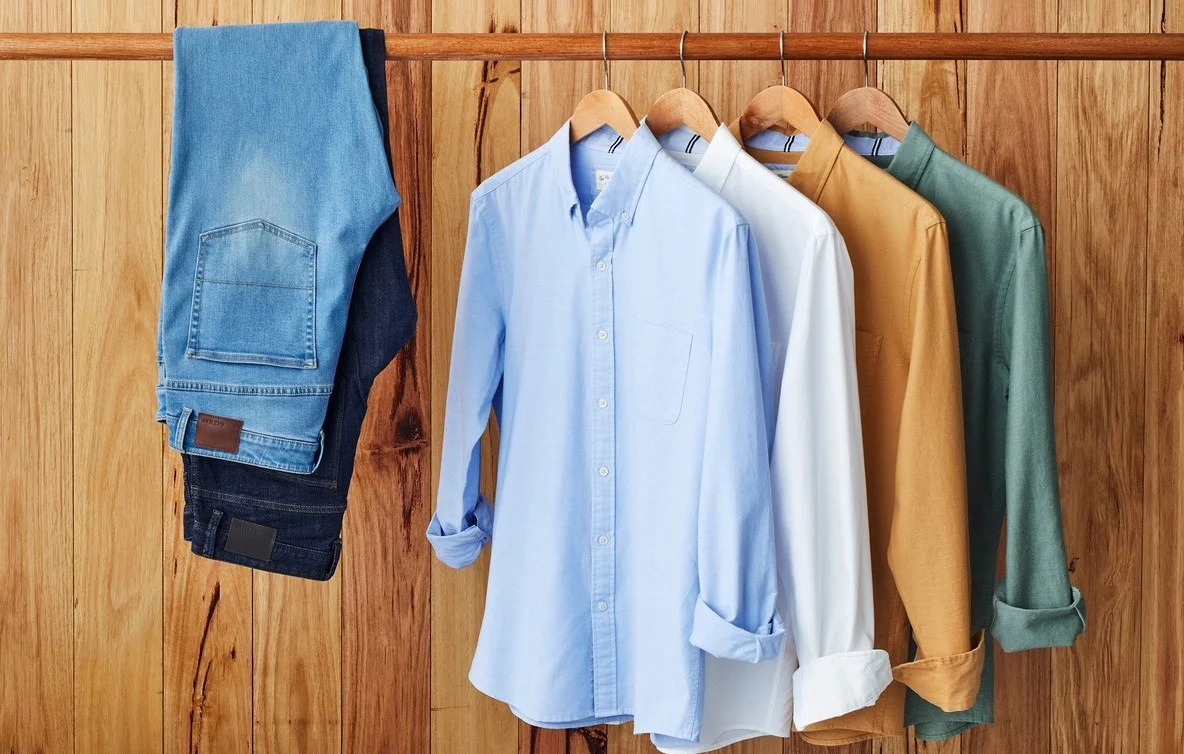

How to Build a Capsule Wardrobe for Men Over 30 Using Versatile Clothing Essentials
Building a capsule wardrobe for men over 30 is not about owning fewer clothes simply for the sake of minimalism. It is about creating a practical collection of well-fitting, interchangeable garments that make getting dressed easier, reduce unnecessary purchases, and work across different parts of everyday life.
Your clothing needs may change as you move through your thirties. You might have a more established career, attend professional meetings, manage family responsibilities, travel more frequently, or want to look polished without spending too much time planning outfits. Your wardrobe should support those demands rather than consist of clothes that only work for one occasion.
A well-planned men’s capsule wardrobe combines timeless basics, comfortable everyday clothing, smart-casual pieces, and a small number of occasion-specific items. Instead of buying a separate outfit for every situation, you build a coordinated collection in which shirts, trousers, jackets, shoes, and accessories work together.
This guide explains how to build a capsule wardrobe for men over 30, which clothing essentials deserve priority, how to choose colours and fabrics, how to dress for different occasions, and how to avoid common wardrobe mistakes. It also covers fit, seasonal planning, budgeting, garment care, and practical outfit combinations so you can create a wardrobe that suits your lifestyle rather than follow short-lived fashion trends.
Table of Contents
What Is a Capsule Wardrobe for Men?
A capsule wardrobe is a carefully selected collection of clothing in which most pieces can be combined with several others. The objective is to create more outfit combinations from fewer, more useful garments.
For example, a navy blazer can work with tailored trousers for a business-casual meeting, dark jeans for dinner, or chinos for a weekend event. A white Oxford shirt can be worn under a blazer, with chinos, or casually with dark denim. Each item serves more than one purpose.
A capsule wardrobe is different from a collection of basic clothes that all look alike. It should include enough variety in texture, colour, structure, and formality to accommodate your real activities.
There is no universal number of garments that every man needs. Some people may build a functional wardrobe with 25 to 30 core pieces, while others may need more because of their profession, climate, hobbies, or social commitments. The number is less important than whether the clothing is comfortable, suitable, and frequently worn.
For men over 30, the most useful approach is to prioritise:
- Clothes that fit properly and feel comfortable.
- Neutral colours that coordinate easily.
- Versatile garments suitable for more than one occasion.
- Quality fabrics that match the local climate.
- A balance of casual, smart-casual, and formal clothing.
- Shoes and accessories that complement several outfits.
The goal is not to eliminate personal style. It is to create a reliable foundation that makes personal style easier to express.
Why Men Over 30 Should Consider a Capsule Wardrobe
A man’s thirties do not automatically require a completely different way of dressing. However, lifestyle changes often make a more organised wardrobe useful.
1. Dressing Becomes More Practical
When your daily schedule includes work, appointments, family activities, and social events, choosing an outfit should not become another time-consuming task.
A coordinated wardrobe reduces the number of decisions involved. If your trousers, shirts, jackets, and shoes share a consistent colour palette, you can create suitable combinations without experimenting every morning.
This is especially helpful if you need to move between different settings during the day. A pair of dark chinos and a well-fitted Oxford shirt, for example, can look appropriate in a relaxed office and still work for an informal evening gathering.
2. Your Clothes Should Reflect Your Current Lifestyle
The clothes you wore at 22 may not serve the same purpose at 32 or 38. Perhaps you now attend more professional meetings, have fewer opportunities to wear graphic T-shirts, or need clothing that works for both office and family occasions.
That does not mean you must dress conservatively or stop wearing casual clothing. It means selecting garments that reflect your current activities.
A capsule wardrobe allows you to retain your personality while making sure the majority of your clothing has a practical purpose.
3. It Can Reduce Impulse Shopping
Buying clothes because they are discounted, trending, or attractive in a shop can lead to a wardrobe full of items that do not coordinate.
A defined colour palette and clothing plan give every purchase a purpose. Before buying something, you can ask whether it works with at least three items you already own.
This is a useful personal purchasing rule, not a scientifically established threshold. Its purpose is to reduce isolated purchases that create more wardrobe clutter.
4. It Can Improve Cost Per Wear
The purchase price of a garment does not tell you its full value. A moderately priced shirt worn regularly may provide better value than an expensive statement piece worn twice.
A simple way to compare clothing value is:
Cost perwear=PurchasepriceNumberofwears
For example, if a pair of trousers costs Rs. 8,000 and you wear it 80 times, its cost per wear is Rs. 100. If another pair costs Rs. 4,000 but is worn only 10 times, its cost per wear is Rs. 400.
This calculation does not include maintenance, repairs, or eventual replacement, but it illustrates why frequently worn versatile clothing can be a sensible purchase.
5. It Encourages More Thoughtful Clothing Consumption
A capsule wardrobe can also support more considered shopping habits. The United Nations Environment Programme identifies textiles and fashion as an important environmental concern, with impacts associated with production, resource use, pollution, and waste.
Buying fewer unnecessary garments, maintaining clothing properly, repairing items when practical, and using clothes for longer can contribute to more responsible consumption. However, a capsule wardrobe is not automatically sustainable: its environmental impact still depends on what is purchased, how it is produced, how long it is used, and how it is eventually discarded.
For broader context, see the UN Environment Programme’s work on sustainable fashion.
Step 1: Assess Your Lifestyle Before Buying Anything
The most common mistake when building a capsule wardrobe is starting with a shopping list instead of examining existing clothing and everyday needs.
A wardrobe designed for a man working in a formal corporate office will look different from one designed for a freelancer, business owner, university lecturer, or someone who works remotely.
Start by identifying how you actually spend your time.
Divide Your Wardrobe Needs Into Categories
A practical starting point is to divide clothing into four categories:
| Category | Typical activities | Clothing priorities |
| Workwear | Office, client meetings, professional appointments | Oxford shirts, chinos, trousers, blazers |
| Everyday casual | Shopping, errands, relaxed outings | T-shirts, jeans, casual shirts |
| Smart casual | Dinners, gatherings, informal events | Polo shirts, overshirts, dark denim, loafers |
| Formal occasions | Weddings, formal meetings, ceremonies | Suit, formal shirt, dress shoes, tie |
The proportions should reflect your schedule. If you work remotely most of the week, you may need more casual clothing than formal shirts. If your profession requires business attire, the opposite may be true.
Review What You Already Own
Take everything out of your wardrobe and assess each garment. Ask yourself:
- Does it fit comfortably?
- Have I worn it during the past year?
- Can I combine it with other clothing?
- Is the fabric still in good condition?
- Does it suit my current lifestyle?
- Would I buy it again today?
Separate clothing into items to keep, repair, donate or resell, and replace.
Do not discard everything that is not currently fashionable. A well-fitting denim jacket or classic shirt may remain useful for years even if it is not part of a current trend.
Step 2: Choose a Colour Palette That Makes Outfit Coordination Easy
Colour selection is one of the most important parts of a successful capsule wardrobe. If your clothing shares a consistent palette, individual garments become easier to combine.
You do not need to wear only black, white, and grey. A good wardrobe combines a few dependable neutral colours with one or two colours that reflect your personality.
Build Around Core Neutral Colours
Best Casual Outfits for Men 2026
Capsule Wardrobe Office Wear Pria: Checklist Item Wajib untuk Kantor
The No-BS Guide To Building a Minimalist Men’s Capsule Wardrobe – Jack Archer
14
Consider using these as your foundation:
| Colour | Why it works | Suitable garments |
| Navy | Versatile and less harsh than black in many daytime outfits | Blazer, chinos, jeans, polo |
| White | Easy to coordinate and useful for layering | T-shirts, shirts, sneakers |
| Charcoal grey | Works in professional and casual combinations | Trousers, sweaters, suits |
| Beige or stone | Adds a lighter neutral option | Chinos, overshirts, jackets |
| Black | Useful for selected evening and casual outfits | T-shirts, shoes, trousers |
| Olive | Adds colour while remaining easy to coordinate | Casual shirts, jackets, chinos |
You do not need every colour in every category. Choose the shades that complement your existing clothing and suit the environments in which you dress.
Add One or Two Accent Colours
Once your neutral foundation is established, introduce a small number of accent colours. Burgundy, forest green, muted blue, rust, and dark brown can add variety without making the wardrobe difficult to coordinate.
For example, a burgundy polo can work with beige chinos, dark jeans, or charcoal trousers. An olive overshirt can complement a white T-shirt and dark denim.
The key is consistency. If every new purchase introduces a completely different colour scheme, your wardrobe will become harder to coordinate.
Consider Skin Tone and Personal Preference
There is no single colour palette that works for every man. The same shade may look different depending on skin tone, lighting, and surrounding colours.
Try clothing in natural daylight and compare how it looks against your face. If a colour makes you feel uncomfortable or does not suit your preferences, there is no reason to include it simply because it is considered a wardrobe essential.
Step 3: Choose the Essential Clothing Pieces
Once you understand your lifestyle and colour palette, you can begin selecting the core garments. The following collection is a practical starting point rather than a compulsory shopping list.
1. Well-Fitting T-Shirts
How To Build A Capsule Wardrobe For Men (2024) | The Quality Edit
Plain T-shirts are among the most useful casual essentials. White, navy, grey, and black are particularly easy to coordinate.
Look for a fabric that feels comfortable against your skin and maintains its shape after washing. Cotton is a popular option, although the ideal fabric weight depends on climate and personal preference.
Pay attention to shoulder seams, sleeve length, neckline, and body length. A T-shirt should follow your natural shape without pulling across the chest or hanging excessively loose.
For a simple outfit, combine a white T-shirt with dark jeans and clean sneakers. For a slightly more polished look, wear a navy T-shirt with beige chinos and leather casual shoes.
Three or four well-fitting T-shirts may be enough for a small capsule wardrobe, although your laundry schedule and daily activities may require more.
2. Oxford Shirts and Casual Button-Downs
ASKET – Launching Two New Wardrobe Essentials — GOODS WE LIKE
An Oxford shirt is a useful bridge between casual and smart-casual clothing. Its textured fabric gives it a relaxed appearance while maintaining a structured shape.
Start with white and light blue. Add a subtle striped or pale neutral shirt if you regularly wear button-downs.
You can wear an Oxford shirt tucked into tailored trousers for a professional setting, untucked with jeans for a relaxed outing, or open over a T-shirt as a light outer layer.
Fit matters more than decoration. The shoulder seam should sit close to the natural shoulder, the collar should be comfortable, and the shirt should not pull excessively across the chest or stomach.
A useful starting point is two or three shirts, adjusted according to how often you wear them.
3. Polo Shirts
Men’s Polo Shirt Outfits 2026: The GSM Rule Nobody Tells You – Go Elm & Co
Polo shirts are ideal when a T-shirt feels too casual but a full button-down shirt seems unnecessary.
A navy or dark green polo can be worn with chinos, dark denim, or tailored shorts in suitable weather. A white or light-coloured polo creates a cleaner daytime appearance.
Choose a collar that maintains its structure and a fabric that is comfortable in your climate. Avoid excessively large logos if you want the garment to remain versatile.
Two or three polos in complementary colours can provide useful variety without occupying too much wardrobe space.
4. Dark-Wash Jeans
Rag & Bone Mens Raw Fit 3 Slim Straight Leg Jeans 28 – Walmart.com
A pair of dark-wash jeans is one of the most practical items in a men’s capsule wardrobe.
Dark denim generally works more easily with smart-casual clothing than heavily distressed or faded jeans. It can be combined with T-shirts, polos, Oxford shirts, sweaters, and casual jackets.
Choose a straight or slim-straight cut if it suits your body shape and preferences. Avoid assuming that a particular fit is mandatory after 30. The best cut is the one that allows comfortable movement and creates balanced proportions.
A medium or dark indigo finish is a reliable starting point. If you wear jeans regularly, a second pair in a different wash may be useful.
5. Chinos in Beige and Navy
Chinos offer a useful alternative to jeans. They are generally more polished than denim but less formal than traditional suit trousers.
Beige chinos pair well with navy, white, olive, brown, and blue. Navy chinos can be worn with white shirts, grey T-shirts, polos, and casual jackets.
The fit should provide enough room through the waist, seat, and thighs without creating excessive folds. Trouser length should also be appropriate for your shoes and preferred style.
Two pairs in complementary colours can cover many everyday and smart-casual situations.
6. Tailored Trousers
Men’s Pants | Tailored Smart Casual Trousers | Polumi
If your work or social schedule includes formal or semi-formal events, invest in at least one pair of well-fitted tailored trousers.
Charcoal grey is a useful starting colour because it works with white, pale blue, navy, and several muted shades.
For a less formal wardrobe, trousers with a clean front and minimal detailing may be more practical than highly structured dress trousers.
Pay attention to waist comfort, thigh room, leg shape, and hem length. A small alteration by a competent tailor can improve the appearance of an otherwise good pair.
7. A Versatile Blazer
How to Wear a Blazer: Men’s Style Guide | Casual to Formal | Westwood
A navy blazer can transform simple clothing into a more polished outfit.
Wear it with a white Oxford shirt and grey trousers for a business-casual setting, or combine it with a plain T-shirt and dark jeans for an evening event where formal tailoring is unnecessary.
An unstructured blazer can feel more relaxed and comfortable than a highly formal suit jacket. It is often a practical choice for men who want one jacket for several occasions.
Fit is particularly important. The shoulder construction should sit properly, the jacket should close without pulling, and the sleeves should allow a suitable amount of shirt cuff to show.
A blazer is not essential for every man. If you rarely attend events where it would be useful, prioritise other garments first.
8. Lightweight Sweaters and Knitwear
MOONCASTLE ムーンキャッスル WO2 エクストラファインメリノ クルーネックニット 日本製 メンズ
A crew-neck sweater is a versatile layering piece for cooler weather and air-conditioned environments.
Navy, charcoal, and beige are dependable choices. They can be worn over an Oxford shirt, with jeans, or over a plain T-shirt.
Cotton knitwear may be useful in milder conditions, while merino wool can provide warmth without the bulk of heavier sweaters. Fabric care instructions matter, particularly for wool garments.
One or two sweaters are enough for many wardrobes, but colder climates may require additional knitwear.
9. A Casual Jacket or Overshirt
Men’s Holiday Style Guide: What to Wear on Holiday | French Connection | French Connection UK
An overshirt or lightweight casual jacket adds structure and makes simple outfits look more complete.
Olive, navy, charcoal, and beige are useful colours. An olive overshirt, for example, works with a white T-shirt, dark jeans, and brown or neutral shoes.
Choose a weight appropriate to the weather. A heavy jacket may be uncomfortable in warm climates, while a very thin overshirt may not provide enough warmth in winter.
10. A Suit for Formal Requirements
Natural Stretch Twill Pleated Trouser Suit – Navy | Charles Tyrwhitt UK
Not every man needs several suits, but one properly fitted suit can be valuable if you attend weddings, formal events, interviews, or professional occasions.
Navy and charcoal are practical starting colours. A simple design without excessive patterns is more likely to remain useful across different events.
A suit jacket and matching trousers should be treated as a coordinated set. Wearing the jacket as an ordinary blazer is not always appropriate because suit fabric and construction may look noticeably different from a separate sports jacket.
If you rarely wear formal clothing, renting or purchasing a suit only when the need arises may be more economical than buying several.
Step 4: Build a Versatile Shoe Collection
Shoes can change the overall appearance of an outfit. A well-chosen pair can make ordinary clothing look more intentional, while unsuitable footwear can make an otherwise good combination feel incomplete.
You do not need a large shoe collection. Start with footwear that covers your most common activities.
1. White or Neutral Sneakers
4 soorten sneakers die iedere man moet hebben | MAN MAN
Clean white or off-white sneakers work with jeans, chinos, casual trousers, and some relaxed tailoring. They are particularly useful for everyday outfits.
Choose a simple design with minimal branding. Leather or synthetic leather may be easier to wipe clean, while canvas and textile options can feel more breathable in warm weather.
Keep them in good condition. Dirty or badly worn sneakers can make even well-fitted clothing look neglected.
2. Brown or Black Leather Shoes
Buy Online Brown Plain Derby Shoes, Formal Shoes for Men | Kings Traders – KING’S
A pair of leather Derby shoes or similarly versatile lace-up shoes is useful for professional and smart-casual occasions.
Brown footwear often pairs naturally with navy, beige, olive, and denim. Black is particularly useful with charcoal, black, and more formal clothing.
Choose the colour based on your trousers and existing wardrobe rather than buying both immediately.
3. Loafers
Ludwig Reiter Slipper PENNY LOAFER DUNKELBRAUN (46)
Loafers are a practical option for men who want footwear that sits between formal dress shoes and casual sneakers.
Leather loafers can work with tailored trousers and smart-casual outfits, while suede versions offer a more relaxed appearance. They can also be worn with chinos and an Oxford shirt.
Fit is important because loafers do not have laces to adjust the upper. Your heel should feel secure, and your toes should have enough room.
4. Boots for Cooler Weather
Best chukka boots for men UK: Top leather and suede styles | The Standard
Chukka boots, Chelsea boots, or simple lace-up boots can add variety to a capsule wardrobe.
Brown chukka boots work well with dark denim and chinos, while black Chelsea boots can create a cleaner appearance with darker trousers.
A boot is not a compulsory purchase. If your climate is hot for most of the year, a second pair of breathable everyday shoes may be more useful.
Step 5: Select Accessories That Add Practical Value
Accessories should complement your clothing rather than dominate it. A small collection of useful accessories can make outfits look more complete without creating unnecessary complexity.
Belts
A brown leather belt and a black belt are useful starting points if you regularly wear leather shoes in both colours. Match the belt reasonably closely with your footwear for more formal combinations.
For casual outfits, the rules can be more relaxed. A simple fabric belt may work well with chinos or denim.
Watches
Classic Minimal Leather Strap Watch – Silver Dial – Only Time Official
A simple watch can add a finishing touch to both casual and professional clothing. Choose a design that suits your everyday activities and personal preferences.
A metal bracelet watch can work with business-casual outfits, while a leather strap may complement tailored clothing. A sports watch can be practical for exercise and everyday use.
You do not need several watches to build a functional wardrobe.
Sunglasses
Choose a frame shape that complements your face and feels comfortable. Classic rectangular, wayfarer-inspired, and aviator-style frames are common options, but face shape should not be treated as a rigid fashion rule.
For eye protection, look for sunglasses labelled to provide 100% UVA and UVB protection or UV400 protection. Dark lenses alone do not guarantee adequate ultraviolet protection.
Bags
A simple backpack, messenger bag, or structured work bag can support your daily routine. Choose based on what you carry and whether your work environment requires a more formal appearance.
Neutral shades such as black, brown, charcoal, and navy are generally easier to coordinate.
Step 6: Adapt Your Capsule Wardrobe to Your Climate
A capsule wardrobe should reflect local weather. The same clothing essentials will not be equally useful in every country or season.
Men living in hot or humid climates may need lightweight shirts, breathable trousers, and shoes that allow better ventilation. Men living in colder regions may need additional knitwear, insulating layers, and weather-resistant outerwear.
For Hot Weather
RIVA White Sneakers – Finsbury Shoes
Prioritise breathable fabrics and lighter construction. Cotton, linen, and suitable cotton-linen blends are useful options, although their comfort depends on fabric weight and weave.
A lightweight linen shirt can be worn with chinos or shorts. A cotton polo may be more suitable for casual workdays, while a breathable T-shirt works for everyday activities.
Avoid buying heavy jackets or thick sweaters unless you regularly travel to colder places or spend time in strongly air-conditioned environments.
For Cooler Weather
Jersey Polo Ralph Lauren Classics Para Hombre
Layering is often more practical than purchasing many separate heavy garments.
A T-shirt or Oxford shirt can form the base layer, followed by a sweater or overshirt. A suitable jacket can provide the outer layer.
This system allows you to adjust your clothing as temperatures change throughout the day.
For Rainy Weather
A water-resistant jacket, practical footwear, and clothing that dries reasonably quickly may be more useful than additional formal garments.
Consider how often you walk, use public transport, or travel outdoors. If rainy conditions are frequent, weather protection should be part of the core wardrobe rather than an occasional accessory.
Step 7: Create Outfit Combinations Before Shopping
One of the most effective ways to avoid unnecessary purchases is to plan combinations rather than buying individual garments.
The following examples show how a relatively small collection can cover several situations.
Buy Indigo Jeans for Men by Shein Online | Ajio.com
Everyday casual
White T-shirt, dark-wash jeans, white sneakers, and a simple watch.
Suitable for shopping, casual meetups, and everyday errands.
Outfit Camisa Azul Cielo Hombre | Sears
Relaxed smart casual
Light blue Oxford shirt, beige chinos, and brown loafers.
Suitable for informal meetings, lunches, and family gatherings.
15 Effortless t-shirt Outfit Ideas | Smart Casual & Casual – EPIC FITS
Polished evening outfit
Navy blazer, white T-shirt, charcoal trousers, and leather shoes.
Suitable for dinners, social events, and selected business-casual settings.
Men’s Outfit: Navy Polo, Olive Chinos, Brown Leather Desert Boots, Tan Canvas Backpack | Lookastic
Comfortable weekend look
Navy polo, olive chinos, and casual leather shoes.
Suitable for weekend activities and informal outings.
12 Men’s Business Casual Work Attire Ideas for Modern Office Wear | Fashion Mode Hub
Business-casual outfit
White Oxford shirt, charcoal trousers, navy blazer, and brown Derby shoes.
Suitable for professional meetings and smart workplace environments.
The purpose of these combinations is to show how the same pieces can be reused. You do not need a separate outfit for every activity.
Step 8: Understand Fit and Proportion After 30
Good fit is one of the most important elements of men’s style. Expensive clothing cannot compensate for garments that are uncomfortable, poorly proportioned, or unsuitable for your body shape.
There is no single ideal body type for a capsule wardrobe. The aim is to select clothing that fits your actual measurements and allows comfortable movement.
Shirts and T-Shirts
Shoulder seams should sit close to your natural shoulders. Sleeves should not be excessively tight, and the garment should have enough room around the chest and waist.
If you tuck a shirt into trousers, check that it stays in place when you move. If you wear it untucked, make sure the length looks intentional rather than excessively long.
Trousers
Trousers should fit comfortably around the waist without requiring a belt to hold them up. Check the seat, thighs, and rise, especially when sitting.
The correct leg shape depends on your proportions and preference. Straight, slim-straight, and relaxed cuts can all work when chosen thoughtfully.
Jackets and Blazers
The shoulder fit is particularly important because alterations in this area can be more complicated and expensive than simple sleeve or trouser adjustments.
A blazer should allow you to move naturally. It should not pull across the chest when buttoned, and the sleeves should be appropriate for the length of your arms.
Alterations Can Improve Existing Clothes
A small alteration can sometimes make a greater difference than buying another garment.
A tailor may be able to adjust trouser length, sleeve length, or waist fit. However, not every garment can be altered successfully, so consider the fabric, construction, and cost before paying for changes.
Step 9: Choose Fabric Quality Without Overspending
Quality is not determined by a brand name or a high price alone. Fabric composition, construction, stitching, finishing, and care requirements all influence how useful a garment will be.
Cotton
Cotton is widely used in T-shirts, shirts, chinos, and casual clothing. Its comfort and breathability make it a practical option for many everyday garments.
Different cotton fabrics behave differently. A lightweight cotton shirt may be comfortable in hot weather, while a heavier cotton T-shirt may feel more substantial but retain more warmth.
Linen
Linen is useful in warm conditions because it is lightweight and allows air to move through the fabric. It wrinkles more readily than many other materials, so it is best suited to people who are comfortable with its naturally relaxed appearance.
Wool and Merino Wool
Wool can provide warmth and is used in suits, sweaters, and other structured garments. Merino wool is often used for finer knitwear and base layers.
Follow the garment’s care label. Some wool products require gentle washing or professional cleaning.
Denim
Denim is a durable cotton-based fabric, although its thickness and construction vary. Choose jeans based on comfort, movement, stitching, and how well the cut suits your wardrobe.
Synthetic Blends
Polyester, nylon, elastane, and other synthetic fibres can add useful properties such as stretch, durability, shape retention, or faster drying.
They are not automatically poor-quality materials. The important question is whether the fabric performs well for the garment’s intended purpose.
Step 10: Build Your Wardrobe on a Realistic Budget
A capsule wardrobe does not need to be expensive. It can be built gradually by prioritising garments that fill genuine gaps.
The best strategy is to divide purchases into essential, useful, and optional categories.
| Priority | Items | Why they matter |
| High | T-shirts, everyday shirts, jeans, chinos, comfortable shoes | Cover frequent everyday needs |
| Medium | Blazer, tailored trousers, polo shirts, sweater | Expand smart-casual and professional combinations |
| Optional | Suit, extra jacket, additional shoes, statement accessories | Depend on lifestyle and occasions |
Buy the Most Frequently Used Items First
If you work in an office five days a week, comfortable work trousers and shirts may deserve priority. If you work remotely, everyday T-shirts and casual trousers may be more useful.
Avoid purchasing an expensive suit before checking whether you actually need one.
Compare Quality and Total Value
A garment that costs more may offer better construction, but this is not guaranteed. Check seams, fabric feel, buttons, zips, stitching, and care requirements.
Compare similar products rather than assuming the highest-priced item is the best option.
Shop Gradually
You can build a functional wardrobe over several months. This gives you time to identify which garments you actually wear and which colours work best.
It also reduces the risk of purchasing several items that look good individually but do not coordinate.
Step 11: Maintain Your Clothes So They Last Longer
A capsule wardrobe works best when its core garments remain wearable. Basic garment care can help preserve colour, shape, and construction.
The environmental case for using clothing longer is also significant. A 2017 WRAP report estimated that extending the active life of clothing by nine months could reduce its carbon, water, and waste footprints by around 20–30%. This is an estimate based on the report’s UK clothing-sector modelling, not a guaranteed saving for every individual garment. WRAP: Valuing Our Clothes.
More recent UNEP material highlights the scale of the wider textile challenge. Its 2025 report estimates that the sector generates 92 million tonnes of textile waste annually. UNEP also reports that only 8% of textile fibres in 2023 came from recycled sources, with less than 1% of the total fibre market coming from textile-to-textile recycling. These figures describe the global textile system, not the direct impact of an individual wardrobe. UNEP: Transforming the Textile Industry.
WeDocs+2
Follow Care Labels
Different fabrics require different washing temperatures, drying methods, and ironing settings. Read the care label before washing a new garment.
Avoid unnecessarily hot washing and excessive tumble drying, particularly for delicate fabrics and knitwear.
Wash Clothes When Necessary
Not every garment needs washing after one short wear. Outer layers such as jackets and some sweaters may need less frequent washing than T-shirts or underwear.
However, hygiene should always come first. Underwear, socks, and clothing that becomes sweaty or visibly dirty should be washed appropriately.
Store Clothes Properly
Use suitable hangers for shirts and jackets. Fold heavy knitwear rather than hanging it if hanging could stretch the shoulders.
Keep clothes dry and ventilated, and protect seasonal garments from dust and moisture.
Repair Instead of Replacing Automatically
Loose buttons, minor seam damage, and small defects may be repairable. A simple repair can extend a garment’s useful life and avoid the need for an unnecessary replacement.
Common Capsule Wardrobe Mistakes Men Over 30 Should Avoid
Even a carefully planned wardrobe can become impractical if purchases are based on assumptions rather than actual needs.
Buying Too Many Neutral Clothes
Neutral colours make coordination easier, but a wardrobe containing only black, grey, and navy can feel repetitive.
Introduce a few accent colours, textures, and patterns. A subtle striped shirt or olive overshirt can add variety without making combinations difficult.
Choosing Fashion Trends Over Personal Style
Trends can be enjoyable, but not every trend deserves a place in a long-term wardrobe.
If a garment does not suit your lifestyle or feels uncomfortable, its popularity should not determine whether you buy it.
Wearing Clothes That Do Not Fit
Keeping clothes that are too tight, too loose, or poorly proportioned can make everyday dressing more difficult.
Choose fit according to your body rather than a particular size label. Sizing varies across brands, and the same person may need different sizes in different garments.
Buying Expensive Clothing Without a Clear Purpose
Premium brands do not automatically offer better value. A costly garment that is rarely worn may be a less useful purchase than an affordable, well-made basic.
Ignoring Footwear
Shoes are an important part of an outfit. Buying versatile clothing but neglecting footwear can leave you with limited combinations.
Start with clean everyday sneakers and one appropriate pair of smarter shoes before expanding the collection.
Creating a Wardrobe for an Imaginary Lifestyle
Do not buy multiple suits if you rarely attend formal events. Do not fill your wardrobe with gym clothing if you need more workwear.
The best capsule wardrobe is designed around the activities you actually do.
A Practical 30-Piece Capsule Wardrobe Checklist for Men Over 30
The following is a sample framework for a man with a mixed casual and smart-casual lifestyle. It is not a universal requirement. Adapt the quantities to your laundry routine, work expectations, and climate.
Wardrobe planning checklist
0 selected
Tops
2 plain T-shirts
1 additional neutral T-shirt
2 Oxford or casual button-down shirts
2 polo shirts
1 casual patterned shirt
1 lightweight sweater
Trousers
1 dark-wash jeans
1 second pair of jeans or casual trousers
1 beige chinos
1 navy or olive chinos
1 pair of tailored trousers
Outerwear and tailoring
1 navy blazer
1 casual jacket or overshirt
1 weather-appropriate outer layer
Footwear
1 pair of clean everyday sneakers
1 pair of leather shoes or loafers
1 pair of weather-appropriate shoes, if needed
Accessories
1 versatile belt
1 second belt if needed
1 everyday watch
1 pair of UV-protective sunglasses
1 practical everyday bag
Occasion-specific
1 suit if your lifestyle requires it
1 formal shirt
1 tie or other required formal accessory
Reset checklist
Use this as a planning tool. You do not need to purchase every item.
Conclusion: Build a Wardrobe That Works for Your Life
A capsule wardrobe for men over 30 should make everyday dressing simpler, not impose a strict fashion formula. The most useful collection is one that reflects your actual lifestyle, fits comfortably, suits your climate, and contains garments that work together.
Start with an honest review of your existing clothing. Choose a manageable colour palette, prioritise versatile shirts and trousers, add appropriate footwear, and introduce tailoring or occasion-specific pieces only when you need them.
Remember that a successful wardrobe is not measured by the number of garments or the brands on their labels. It is measured by how often you wear the clothes, how comfortably they fit, how easily they coordinate, and how well they support your everyday activities.
Build gradually, maintain what you own, and make each new purchase serve a clear purpose. That is how a practical men’s capsule wardrobe becomes a long-term investment in personal style.
Frequently Asked Questions
1. How many clothes should a man over 30 have in a capsule wardrobe?
There is no fixed number. A practical starter wardrobe may contain approximately 25–35 core garments and accessories, depending on how the collection is counted. Your profession, climate, laundry routine, and social activities determine the appropriate size.
2. What are the essential clothing items for men over 30?
Useful essentials include plain T-shirts, Oxford shirts, polo shirts, dark jeans, chinos, tailored trousers, a versatile jacket, comfortable sneakers, and suitable leather shoes. A blazer or suit is useful when your work or social activities require more formal clothing.
3. Which colours are best for a men’s capsule wardrobe?
Navy, white, charcoal grey, beige, olive, and black are useful foundation colours. You can introduce burgundy, forest green, muted blue, or rust as accent colours. Choose shades that complement your existing clothing and personal preferences.
4. Should men over 30 stop wearing T-shirts and jeans?
No. T-shirts and jeans remain useful at any adult age. The important considerations are fit, fabric, condition, and styling. A clean T-shirt with dark jeans and suitable sneakers can create a balanced casual outfit.
5. What is the best style for men in their thirties?
There is no single best style. Smart casual, minimalist, classic, business casual, and relaxed contemporary clothing can all work. Your clothing should reflect your profession, personality, comfort preferences, and daily activities.
6. Are expensive clothes necessary for a capsule wardrobe?
No. Price does not automatically indicate quality. Look at fabric, construction, fit, durability, and comfort. A reasonably priced garment that is frequently worn may provide better value than an expensive item that remains unused.
7. How can I make a small wardrobe look different every day?
Use interchangeable clothing, layering, and accessories. For example, the same dark jeans can be worn with a T-shirt, polo, Oxford shirt, or sweater. Changing the shoes and outer layer can also change the overall appearance.
8. What shoes should every man over 30 own?
For a practical starter collection, consider clean neutral sneakers and one pair of smarter leather shoes or loafers. Add boots or other specialist footwear according to climate, work requirements, and personal activities.
9. Is a blazer necessary for a capsule wardrobe?
No. A blazer is useful if you attend professional meetings, dinners, or smart-casual events. If you rarely wear one, prioritise everyday clothing first. A navy blazer is a versatile option when tailoring is part of your lifestyle.
10. What fabrics are best for everyday men’s clothing?
Cotton is a practical choice for shirts and T-shirts, linen can be useful in hot weather, wool and merino provide warmth, and denim works well for casual trousers. Synthetic blends can also offer useful stretch, durability, and quick-drying properties.
11. How often should I replace my wardrobe?
There is no required replacement schedule. Replace garments when they no longer fit, are damaged beyond practical repair, or no longer serve your needs. Proper washing, storage, and occasional repairs can extend the useful life of clothing.
12. Can I build a capsule wardrobe on a limited budget?
Yes. Begin with garments you already own and identify genuine gaps. Purchase the most frequently used items first, choose colours that coordinate, and shop gradually. You can also consider good-quality second-hand clothing where suitable.
13. Is a capsule wardrobe suitable for men living in hot climates?
Yes. Choose lightweight shirts, breathable T-shirts, comfortable chinos, suitable footwear, and light outerwear. Cotton, linen, and appropriate blends can be useful. Adjust the collection to humidity, temperature, and the amount of time you spend outdoors.
14. How do I know whether a garment belongs in my capsule wardrobe?
Ask whether it fits comfortably, suits your lifestyle, coordinates with other garments, and is likely to be worn regularly. If it only works with one specific outfit and has no clear occasion-based purpose, consider whether you really need it.
15. Does a capsule wardrobe help reduce clothing waste?
It can encourage more deliberate purchases and longer use, but it is not automatically sustainable. Buying fewer unnecessary garments, choosing durable products, repairing clothing, and using garments for longer can help reduce consumption-related impacts. UNEP’s textile-sector research highlights the importance of reuse, circularity, and reducing waste.
if you are looking to write about fashion, You can search for us with the query “Write for Us Fashion” in search engines.
For more updates and the latest fashion news, visit StyleInFlux.