
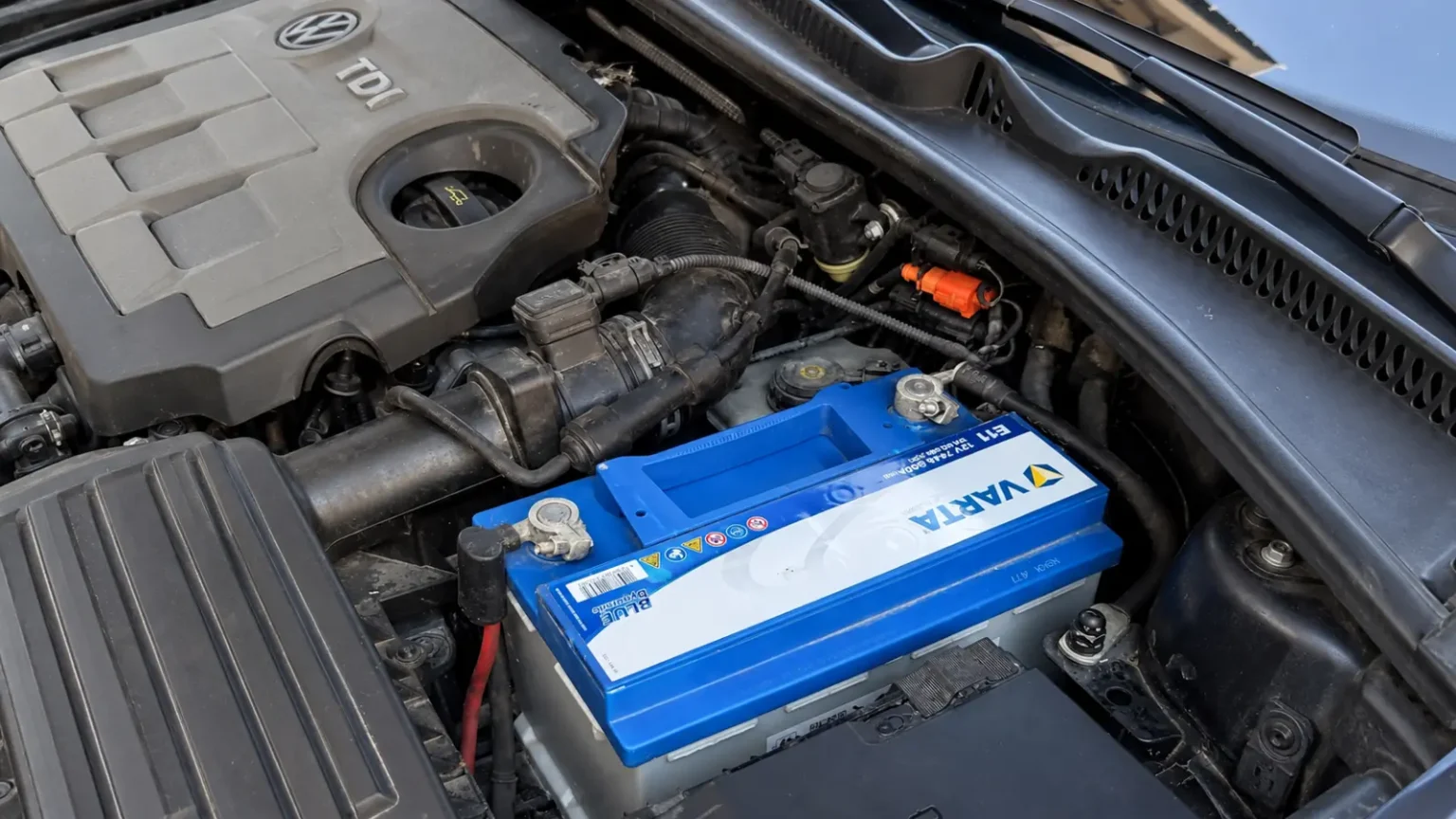

Why Does a Car Battery Keep Dying Overnight? Common Electrical Faults, Parasitic Drain, and Diagnostic Tests
A car battery that repeatedly goes flat overnight can be frustrating, particularly when the vehicle starts normally one evening but refuses to start the following morning. Replacing the battery may seem like the obvious solution, but a new battery will not solve the problem if an electrical component continues drawing power after the engine is switched off.
An overnight battery failure can have several causes: a weak or ageing battery, an alternator that is not charging correctly, a faulty relay, an interior light that remains on, an aftermarket accessory, or a vehicle control module that fails to enter sleep mode. These problems can produce similar symptoms, which is why replacing parts without testing can waste money.
One of the most important concepts in this type of fault is parasitic battery drain. Modern vehicles use electronic control units, security systems, keyless entry, telematics, and other components that may continue consuming a small amount of electricity while parked. This normal standby consumption becomes a problem when a component remains active or repeatedly wakes the vehicle.
This guide explains why a car battery keeps dying overnight, how to distinguish battery failure from an electrical drain, which diagnostic tests technicians use, and how to identify common faults without replacing components unnecessarily.
Table of Contents
Why Does a Car Battery Keep Dying Overnight?
A car battery stores electrical energy needed to start the engine and supply power to vehicle systems when the engine is not running. Once the engine starts, the alternator or charging system supplies electrical power and replenishes the battery, subject to the vehicle’s charging strategy and operating conditions.
When the engine is off, the battery still supports certain functions. These can include the alarm system, central locking receiver, immobiliser, electronic memory, telematics, and control modules. A small standby current is therefore normal.
The problem occurs when the battery loses more charge while parked than it can safely tolerate before the next start. This may happen because the battery has lost capacity, the charging system did not replenish it adequately, or an electrical circuit continues drawing excessive current.
A useful way to approach the problem is to separate three possibilities:
- Insufficient battery capacity: The battery is aged, damaged, deeply discharged, or unable to hold a charge.
- Charging-system failure: The alternator, regulator, wiring, belt, or related component is not restoring the battery’s charge properly.
- Excessive parked current: An electrical component continues using power after the vehicle should have entered its normal shutdown state.
More than one problem can exist at the same time. For example, a weak battery may be unable to tolerate a modest parasitic drain that a healthy battery could withstand for longer.
A technical service bulletin published through the US National Highway Traffic Safety Administration (NHTSA) illustrates why diagnosis should begin with verification rather than immediately assuming parasitic drain. It specifically recommends confirming repeated battery-discharge complaints, testing battery condition, checking the charging system, and investigating electrical draw only after relevant preliminary checks.
What Is a Parasitic Battery Drain?
Parasitic battery drain, also called key-off current draw or dark current, is electrical consumption that continues after the ignition is switched off and the vehicle is parked.
Some current consumption is necessary. A vehicle’s alarm, immobiliser, remote locking receiver, clock, and electronic memory may need to remain available. Modern vehicles may also take time to shut down their electronic networks after the driver leaves.
A parasitic drain becomes abnormal when the current remains above the manufacturer’s specified limit or a circuit repeatedly activates when it should be asleep.
For example, consider a hypothetical battery that has a capacity of 60 amp-hours (Ah). A continuous 0.05-amp, or 50-milliamp, load consumes:
0.05 A × 24 hours = 1.2 Ah per day.
At 0.5 A, the same calculation becomes:
0.5 A × 24 hours = 12 Ah per day.
The second load consumes ten times as much charge. Over a night, that difference can be significant, especially when the battery is already weak or not fully charged.
These calculations are simplified illustrations. A battery’s usable starting capacity depends on temperature, state of charge, age, chemistry, and the current required to crank the engine. It is therefore not possible to calculate an exact number of safe parking hours from amp-hour capacity alone.
How much parasitic current is normal?
There is no single current limit that applies to every car. The correct sleep-current specification depends on the manufacturer, model, equipment, security system, telematics features, and shutdown procedure.
A commonly used diagnostic reference is approximately 50 milliamps (0.05 A) after the vehicle has fully entered sleep mode. Snap-on’s technical guidance describes less than 50 mA as a general guide, and a NHTSA-hosted manufacturer bulletin also identifies a continuous draw above 50 mA as a condition requiring investigation in the context of that procedure.
However, 50 mA is not a universal replacement for the manufacturer’s specification. Some vehicles have different permitted standby loads or periodic wake-up behaviour. Always check model-specific service information before deciding that a measured value proves a fault.
The timing of the measurement is equally important. A vehicle can draw considerably more current immediately after the ignition is switched off because electronic modules are still completing shutdown operations.
Common Reasons a Car Battery Dies Overnight
Understanding the most frequent electrical faults helps narrow the diagnosis. The important task is not simply to identify a component that could cause a drain, but to prove which circuit is responsible.
1. A faulty alternator or charging system
The alternator generates electrical power while the engine runs. It supplies the vehicle’s electrical loads and helps recharge the battery.
If the alternator is not producing the required output, the battery may remain partially discharged after driving. The vehicle can then start in the evening but fail to crank after being parked.
Possible causes include a failed voltage regulator, damaged alternator windings, worn internal components, a loose or slipping drive belt, damaged charging cables, or poor electrical connections.
An alternator can also create a battery drain when a rectifier diode fails. The rectifier converts the alternator’s generated alternating current (AC) into direct current (DC) for the vehicle. A defective diode may allow unwanted current flow when the engine is off.
Signs that justify checking the charging system include a battery warning light, dimming or flickering lights, electrical accessories behaving inconsistently, repeated low battery charge, and a battery that becomes discharged despite regular driving.
A dead battery does not automatically mean the alternator has failed. The battery, alternator output, wiring, belt condition, and charging control system should be tested before replacement.
2. Interior lights that remain switched on
Interior lights are a simple but easily overlooked source of overnight battery drain.
A door switch, boot or trunk latch, glovebox switch, or faulty courtesy-light circuit may prevent a lamp from switching off. Sometimes the light is not visible from outside the vehicle, particularly when the glovebox or luggage compartment is closed.
A damaged door latch sensor can also report that a door is open even when it is physically shut. The body control module may consequently keep certain circuits active.
Check the dome light, reading lights, boot lamp, glovebox lamp, vanity mirror lights, and any illuminated storage compartments. On vehicles with automatic lighting, verify that the switch and dimmer settings are functioning correctly.
A technician may use a scan tool to compare door and latch status reported by the body control module with the actual physical condition.
3. Faulty relays that remain energised
Relays control electrical circuits such as cooling fans, fuel pumps, heated accessories, and other vehicle systems.
A relay with damaged or welded contacts may continue supplying power after the ignition is turned off. A control circuit can also keep a relay energised when it should have switched off.
For example, a relay that remains closed may allow a fan or electronic module to consume battery power while the car is parked.
The correct diagnosis involves identifying which circuit is drawing current and then testing the relay’s control signal, contacts, and wiring. Simply removing and replacing every relay is not an efficient diagnostic method, particularly when the relay is being commanded on by another faulty component.
4. Aftermarket accessories and electrical installations
Aftermarket accessories are a common area to inspect when a battery repeatedly loses charge.
These may include:
- Dash cameras with parking-mode recording.
- Aftermarket alarms and immobilisers.
- GPS trackers and vehicle telematics devices.
- Audio amplifiers and upgraded entertainment systems.
- Remote-start systems.
- OBD diagnostic devices and tracking adapters.
- USB chargers and accessories connected to permanent power.
Some accessories are designed to remain active while the vehicle is parked. That does not necessarily make them faulty, but incorrect installation, poor configuration, or a defective device can create excessive current consumption.
A dash camera, for example, may be connected to a permanent battery supply without a properly configured low-voltage cut-off. It can then continue recording until the battery voltage falls below a level suitable for reliable starting.
A useful diagnostic step is to identify all aftermarket wiring and accessories, then test their circuits according to the installation instructions. Disconnecting a device without understanding its wiring can interfere with alarms, memory settings, or other systems.
5. A control module that does not enter sleep mode
Modern vehicles contain multiple electronic control units (ECUs). These communicate through vehicle networks and manage functions such as body electronics, engine control, infotainment, security, climate control, and driver assistance.
After the ignition is switched off, these modules may remain active temporarily. They normally enter a low-power state after completing their shutdown routines.
A fault can occur when a module remains awake, receives repeated wake-up signals, or fails to communicate correctly with another module. The result may be a persistent or intermittent parasitic drain.
Possible triggers include faulty door sensors, malfunctioning keyless-entry systems, network communication faults, defective control modules, or software-related issues.
Snap-on’s technical guidance notes that electronic modules can remain active after the ignition is switched off and that some vehicles may wake again after an initial shutdown. This is why technicians need to allow the vehicle to reach its specified sleep state before interpreting current readings.
6. Keyless entry and proximity-key activity
Keyless entry systems allow drivers to unlock or start vehicles without inserting a conventional key. These systems use communication between the vehicle and a key fob.
If the key fob is kept very close to the vehicle, the vehicle may continue communicating with it or respond to proximity-related activity. Depending on the design, this can contribute to unnecessary wake-ups or additional standby consumption.
The effect varies by manufacturer and vehicle. It should not be assumed that every keyless vehicle will develop an overnight drain because a key is stored nearby.
As a simple precaution, keep the key fob away from the parked vehicle. If the battery continues to discharge, a technician can check the keyless-entry system, relevant control-module activity, and manufacturer-specific procedures.
7. Corroded battery terminals and poor electrical connections
Battery terminals and cable connections carry substantial electrical current. Corrosion, looseness, damaged cables, and poor ground connections can interfere with charging and starting.
A poor connection may prevent the battery from receiving a proper charge or cause excessive voltage drop during cranking. This can create symptoms that resemble a failing battery.
Inspect the positive and negative terminals, cable clamps, ground straps, and charging connections. Look for corrosion deposits, loose fasteners, damaged insulation, and signs of overheating.
A visual inspection is not always enough. A voltage-drop test under load can help identify resistance in the starter or charging circuit.
8. An ageing or internally damaged battery
A battery can lose its ability to store and deliver energy over time. Internal deterioration, damaged plates, low electrolyte in serviceable designs, repeated deep discharge, excessive heat, or freezing conditions can reduce its performance.
A battery may show a reasonable open-circuit voltage yet fail under a starting load. That is why voltage alone cannot confirm battery health.
If the battery is old, repeatedly discharged, or has failed a proper battery condition test, replacement may be necessary. However, the underlying cause of repeated discharge should still be investigated.
Diagnostic Tests to Find the Cause of Overnight Battery Drain
Accurate diagnosis involves testing the battery, charging system, key-off current, and individual electrical circuits. The order matters because an unhealthy battery can complicate the interpretation of other results.
The following tests describe common workshop procedures. Some require electrical training and suitable equipment. Incorrect use of a multimeter can blow its internal fuse, damage the instrument, interrupt vehicle electronics, or create a short circuit.
Test 1: Inspect and test the battery condition
Begin with a visual inspection. Check the battery case for swelling, cracks, leakage, or damage. Inspect the terminals and cable connections for corrosion and looseness.
Next, fully charge the battery using a suitable charger and the manufacturer’s recommended procedure. A battery that has been deeply discharged should not be judged solely by its immediate voltage after a jump-start.
A technician may use a conductance tester or an approved load tester to assess battery condition. The test should account for the battery’s type, rated cold-cranking amps (CCA), and temperature.
A typical fully charged 12-volt lead-acid battery may show an open-circuit voltage around 12.6–12.8 volts after resting, although the exact value depends on battery chemistry, temperature, and design. This is a general reference, not a pass/fail test for every vehicle.
If the battery cannot hold charge or fails its approved condition test after correct charging, it may need replacement.
Test 2: Check charging-system output
The next step is to determine whether the charging system is replenishing the battery while the engine runs.
A technician can measure voltage at the battery terminals with the engine off and running, then compare the readings with the manufacturer’s specifications. A conventional charging system may commonly operate around 13.8–14.7 volts under certain conditions, but modern vehicles can use computer-controlled charging strategies that vary voltage according to battery state, temperature, and operating conditions.
This means a single voltage reading should not be used to condemn an alternator.
The test should consider electrical load, engine speed, battery condition, charging-system commands, and the vehicle’s service procedure. A scan tool may be needed to examine charging-system data on vehicles with intelligent battery sensors or smart alternators.
Test 3: Perform an alternator ripple-voltage test
A defective alternator diode can cause abnormal AC ripple in the charging output and may also contribute to battery discharge when parked.
A multimeter with an appropriate AC voltage measurement function can be used to assess ripple at the battery or alternator output, following the manufacturer’s procedure.
Fluke’s automotive multimeter guidance explains that ripple-voltage testing can help identify rectifier diode and internal alternator problems. It cites less than 0.5 V AC as a typical healthy-system reference in its discussion, but actual limits and test conditions should be checked against vehicle specifications and the instrument’s capabilities.
A ripple test is not a substitute for a complete alternator inspection. Abnormal readings should be investigated alongside charging output, wiring, and diode testing.
Test 4: Measure parasitic current draw
This is one of the most useful tests when a battery repeatedly loses charge while the vehicle is parked.
A technician measures the current flowing from the battery after the vehicle has been switched off and its electronic systems have completed their shutdown process.
A common method uses a suitable current clamp around a battery cable. Another method uses a multimeter connected in series with the battery circuit. The clamp method can be preferable because it avoids opening the battery circuit and disturbing electronic settings.
For a series multimeter test, the technician must use the correct current input, range, and connection procedure. The meter is initially configured for a suitable high-current range before more precise measurements are attempted.
The vehicle must be prepared correctly:
- Switch off the ignition and all electrical accessories.
- Ensure doors, boot, bonnet, and other relevant switches are in the correct state.
- Keep the key fob away from the vehicle if required by the manufacturer’s procedure.
- Disconnect diagnostic equipment or accessories that may keep the network awake, where appropriate.
- Allow the control modules to enter their specified sleep state.
- Record current after the reading stabilises, including any recurring wake-up activity.
The sleep period varies. Some vehicles may settle within minutes, while others need substantially longer. A 2025 manufacturer service bulletin hosted by NHTSA describes a vehicle-specific preparation process involving a 25–55-minute wait, demonstrating why a universal waiting time should not be assumed.
A critical safety point: never attempt to crank the engine or operate high-current devices while a multimeter is connected in series in its current-measurement configuration. The resulting current can exceed the meter’s rating and cause damage or injury. If you are unfamiliar with current measurement, have a qualified technician perform the test.
Test 5: Isolate the faulty circuit using fuses
If the measured current remains above the applicable specification, the next task is to identify which circuit is responsible.
One traditional technique is fuse isolation. A technician monitors the current while checking individual fuse circuits. If removing a particular fuse causes the current to drop significantly, the associated circuit becomes a strong candidate for further investigation.
This does not automatically prove that the fuse or every component on that circuit is defective. The circuit may contain multiple modules, relays, sensors, and switches. A wiring diagram is needed to trace the possible causes.
On modern vehicles, pulling fuses can wake modules, erase certain settings, or change network behaviour. Technicians may therefore use a voltage-drop measurement across fuses instead. This can help identify current flow without repeatedly interrupting power to the circuit.
Test 6: Scan for fault codes and module activity
A diagnostic scan tool can provide useful information about the vehicle’s electronic systems.
Depending on the make and model, a technician may inspect:
- Stored and current diagnostic trouble codes.
- Body control module status.
- Door and boot latch switch readings.
- Keyless-entry activity.
- Battery sensor data.
- Network communication faults.
- Module wake-up requests.
- Charging-system control information.
A scan tool is particularly useful when the current drain is intermittent or related to a module that wakes unexpectedly.
However, connecting a diagnostic tool can itself affect the vehicle’s electrical state. Some diagnostic ports supply constant battery power, and some equipment can keep modules awake. Testing procedures should account for this.
How to Identify an Intermittent Parasitic Drain
Not every electrical drain is continuous. A vehicle may have normal current consumption for several hours, then suddenly wake up because of a faulty sensor, module, relay, or communication event.
Intermittent faults can be difficult to detect with a quick multimeter reading. A technician may need to monitor current over an extended period using a suitable data-logging current clamp or diagnostic equipment.
For example, a vehicle might normally settle to a low standby current but briefly draw several hundred milliamps whenever a faulty door sensor reports movement. A short test performed when the vehicle is asleep may miss the event.
A useful diagnostic record includes the time of each current increase, the size and duration of the draw, and any associated module activity. The technician can then compare the event with the vehicle’s wiring diagram and service information.
A thermal camera may also help identify a module or relay that remains energised and produces unexpected heat. Snap-on describes this as one additional technique for investigating difficult parasitic-draw faults. It is a supporting diagnostic method rather than proof by itself.
Why Replacing the Battery Does Not Always Solve the Problem
A new battery can temporarily hide an electrical drain because it starts with a higher available charge and may have better capacity than the old battery.
However, if a circuit continues drawing excessive current, the replacement battery may eventually become discharged too.
Consider a hypothetical situation in which a vehicle has a persistent 300 mA drain:
0.3 A × 12 hours = 3.6 Ah.
The load consumes 3.6 amp-hours over a 12-hour night. Whether this prevents the next start depends on the battery’s actual condition, temperature, initial charge, and the engine’s starting requirements.
The important lesson is that battery replacement and electrical diagnosis are separate tasks. A battery that fails testing should be replaced, but repeated discharge should still be investigated if the vehicle has an unexplained parked-current problem.
How to Prevent Your Car Battery from Dying Overnight
Prevention starts with keeping the battery in good condition and avoiding unnecessary electrical loads when the vehicle is parked.
Turn off lights and accessories before leaving the car. Check that the boot, glovebox, doors, and storage compartments are properly closed. Unplug devices that are not designed to remain connected while the engine is off.
If you use a dash camera, GPS tracker, or parking-mode security system, verify that it has been installed correctly and configured with a suitable low-voltage cut-off where supported.
Keep the key fob away from the vehicle when parked if the manufacturer recommends doing so. This is a simple precaution for vehicles with proximity-based entry systems.
If the car is used infrequently, consider a compatible battery maintainer, provided it is approved for the battery type and used according to its instructions. A maintainer is not a repair for an excessive electrical drain; the fault should still be diagnosed.
Have the battery and charging system checked when warning lights appear, starting becomes slow, or the battery repeatedly needs a jump-start. Early testing can prevent a minor electrical fault from turning into a recurring breakdown.
When Should You Take the Car to an Auto Electrician?
A single flat battery can result from an accidentally left-on light or an unusually long period without driving. Repeated overnight failures, however, justify a proper electrical diagnosis.
Seek professional help if a fully charged battery repeatedly loses power, the battery warning light remains illuminated, electrical systems behave unpredictably, or the vehicle continues to drain its battery despite the obvious accessories being switched off.
A qualified auto electrician can use wiring diagrams, current clamps, scan tools, voltage-drop testing, and manufacturer-specific service procedures to locate the fault.
This is especially important for vehicles with complex electronic systems, start-stop technology, battery management sensors, or multiple networked control modules. Disconnecting the battery or pulling fuses without following the correct procedure may create additional problems.
The most cost-effective repair is usually the one supported by test results, not the one based on guessing which component is most likely to fail.
Conclusion
A car battery that keeps dying overnight is not necessarily a sign that the battery itself is defective. The underlying cause may be a weak battery, a charging-system problem, an alternator diode fault, a light that remains on, a defective relay, an aftermarket accessory, or a control module that fails to enter sleep mode.
The most reliable diagnostic approach is systematic. Start by checking battery condition and charging performance. Then measure key-off current after the vehicle has completed its normal shutdown process. If the draw is excessive, isolate the responsible circuit and test its components using the manufacturer’s wiring information.
A reading around 50 mA is often used as a general reference, but the correct acceptable current depends on the vehicle. Likewise, charging voltage and sleep timing should be judged against the relevant manufacturer’s procedure rather than a universal figure.
Avoid replacing the battery, alternator, or control modules without evidence. Proper electrical testing can identify the actual fault, reduce repeat breakdowns, and help protect the replacement battery from the same problem.
Frequently Asked Questions
1. Why does my car battery die overnight but work normally during the day?
A battery may lose charge while parked because of a parasitic electrical drain, a weak battery, or incomplete charging. Interior lights, aftermarket accessories, faulty relays, and control modules that remain active are possible causes. Battery and key-off current testing can help distinguish them.
2. How do I know if my car has a parasitic battery drain?
A technician measures current consumption after the ignition is switched off and the vehicle’s electronic systems have entered sleep mode. A sustained reading above the manufacturer’s specified limit indicates that further circuit investigation may be necessary.
3. Is 50 mA too much battery drain?
Not necessarily for every vehicle. Approximately 50 mA is a common general diagnostic reference, but acceptable standby current varies by model and equipment. The manufacturer’s sleep-current specification should determine whether a measured reading is excessive.
4. Can a bad alternator drain a car battery overnight?
Yes. A failed alternator rectifier diode can allow unwanted current flow when the engine is off. An alternator may also fail to recharge the battery adequately while driving. Charging-system and parasitic-current tests can help identify the problem.
5. Can a dash camera drain a car battery overnight?
Yes. A dash camera connected to a permanent battery supply may continue recording while the vehicle is parked. Incorrect installation, high standby consumption, or a poorly configured low-voltage cut-off can contribute to battery discharge.
6. How long should I wait before testing parasitic battery drain?
Wait until the vehicle has completed its manufacturer-specified shutdown process. Some vehicles enter sleep mode within minutes, while others need substantially longer. A universal waiting time should not replace the vehicle’s service procedure.
7. Can a faulty relay cause a dead battery overnight?
Yes. A relay with stuck contacts or a control circuit that keeps it energised can supply power to an electrical component after the vehicle is switched off. Circuit testing is needed to identify whether the relay or another component is responsible.
8. Can a new car battery go flat overnight?
Yes. A new battery can discharge if an electrical component continues drawing excessive current or if the charging system does not replenish it properly. Replacing the battery does not repair an underlying electrical fault.
9. Can cold weather make a car battery die overnight?
Cold temperatures can reduce a lead-acid battery’s available starting performance and make it harder to crank an engine. An ageing or partially discharged battery may be affected more noticeably. Cold weather can expose an existing weakness, even when it is not the only cause.
10. How can I test car battery drain with a multimeter?
A technician can measure current in series with the battery or use a suitable current clamp. The vehicle must be prepared correctly and allowed to enter sleep mode. The meter must have an appropriate current rating and connection setup. Never crank the engine with a multimeter connected in series in current mode.
11. Does leaving an OBD scanner plugged in drain the battery?
It can. Some OBD devices draw power from the diagnostic connector even when the ignition is off. Certain devices may also keep vehicle systems awake. Remove unneeded diagnostic adapters and check their power requirements if an unexplained drain occurs.
12. Should I replace my battery if it keeps dying overnight?
Only if testing shows that the battery is defective or unable to hold an adequate charge. If a parasitic drain or charging-system fault is responsible, a replacement battery may eventually experience the same problem.
If you are looking to write about automotive you can search for us with the query “Write for Us Automotive” in search engines.
For more updates and the latest Automotive news, visit StyleInFlux.