
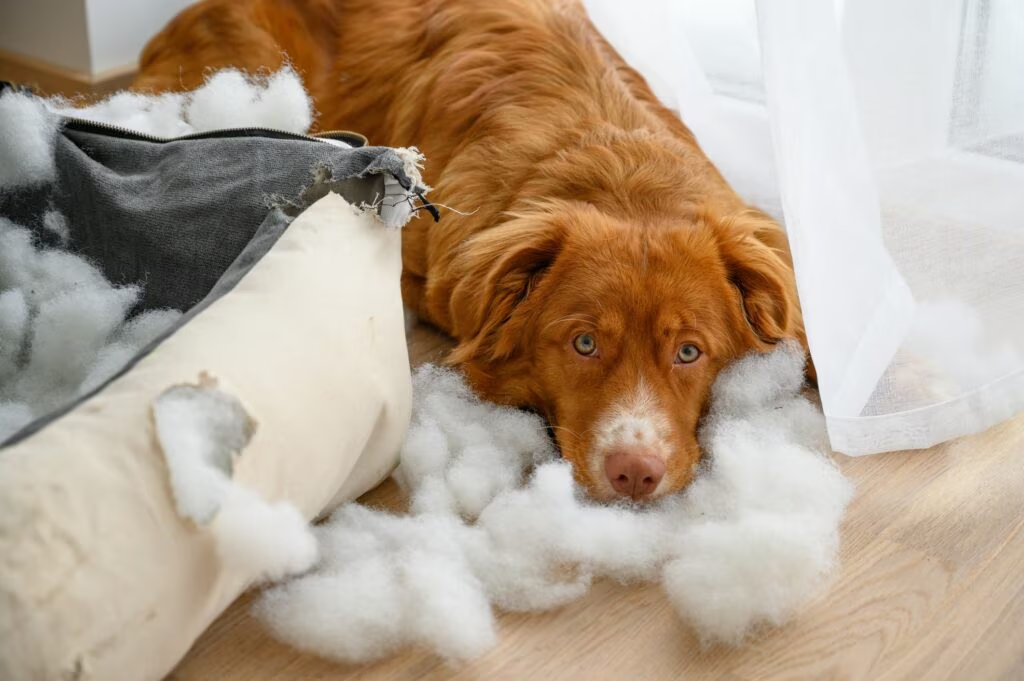

How to Manage Separation Anxiety in Dogs
Separation anxiety in dogs is more than barking when an owner leaves or chewing a favourite pair of shoes. For some dogs, being left alone triggers intense distress that can involve persistent vocalisation, pacing, destructive behaviour, house soiling, escape attempts, and even self-injury. These behaviours are not necessarily signs of poor training or deliberate disobedience. They may indicate that a dog is struggling to cope with separation from a person or, in some cases, another animal.
Managing canine separation anxiety requires more than keeping a dog busy with toys or asking it to stay in another room. Effective treatment usually combines careful observation, changes to the dog’s daily environment, gradual behaviour training, and veterinary support when necessary. The central aim is to help the dog feel safe during progressively longer periods alone—not to force it to endure distress until it stops making noise.
Separation-related problems are also not limited to dogs that have recently been adopted or those that spend most of the day with their owners. A dog may develop distress after a household move, a change in work schedule, the departure of a family member, or a disruption to its usual routine. Other dogs show signs from an early age.
This guide explains how to recognise separation anxiety, distinguish it from other behavioural or medical conditions, create a practical training plan, and understand when professional help or medication may be appropriate.
Table of Contents
What Is Separation Anxiety in Dogs?
Separation anxiety is a behavioural problem in which a dog experiences significant distress when separated from an attachment figure or left without the company it is accustomed to. The distress may begin when the owner prepares to leave, shortly after the door closes, or when the dog realises that its usual companion is unavailable.
Veterinary professionals also use terms such as separation-related behaviour and separation distress. These descriptions are useful because not every dog that barks or damages household objects when alone has the same underlying problem. Some dogs are distressed specifically by the absence of a particular person, while others struggle with being alone regardless of who leaves.
The Merck Veterinary Manual describes separation-related signs as commonly appearing within the first 15 to 30 minutes after an owner’s departure. Some dogs become anxious even earlier, reacting to familiar departure signals such as shoes, keys, bags, or a coat. Video observation is particularly useful because it can show what happens after the owner leaves, rather than relying only on damage or noise discovered later. Source: Merck Veterinary Manual, Behavior Problems of Dogs.
It is important to distinguish normal attachment from anxiety. A dog that follows its owner from room to room is not automatically suffering from separation anxiety. Some dogs simply enjoy human company but remain relaxed when left alone. The concern arises when separation consistently triggers signs of fear, distress, or an inability to settle.
What Causes Separation Anxiety in Dogs?
There is no single cause that explains every case. Separation-related distress can develop through a combination of previous experiences, changes in routine, individual temperament, learning history, and health factors. A dog may also become distressed after an event that appears minor to the household.
Understanding the possible trigger can help owners and veterinary professionals plan appropriate management. However, identifying a trigger does not necessarily establish a diagnosis.
Changes in the Household or Daily Routine
Dogs often become accustomed to predictable patterns. They may learn when family members wake up, leave for work, return home, and provide meals or walks. A sudden change can make their environment less predictable.
For example, a dog that has spent several months with an owner working from home may struggle when that person begins commuting every day. A new work schedule, longer periods alone, a household move, or the departure of a family member can also contribute to separation-related distress.
The ASPCA identifies changes in guardianship, residence, household membership, and daily schedules among situations associated with the development of separation anxiety. Source: ASPCA, Separation Anxiety.
Adoption, Rehoming, and Changes in Caregivers
Dogs that have experienced a change of home or caregiver may need time to adjust to a new environment. Some adopted dogs become strongly attached to their new caregivers and show distress when left alone.
However, adoption does not automatically cause separation anxiety. Many adopted dogs adapt comfortably to being alone, while dogs raised in one household from puppyhood can also develop the condition.
A dog’s history can provide useful context, but its current behaviour and response to carefully managed separation are more important than assumptions about its background.
Lack of Experience Being Alone
Puppies and newly adopted dogs may have had limited opportunities to learn that short periods without human company are safe. If a dog has never practised being alone gradually, a sudden long absence may be difficult.
This does not mean that owners should deliberately leave a puppy distressed to make it independent. Instead, dogs can learn to spend short, comfortable periods resting or engaging in independent activities while a caregiver remains nearby and gradually increases the distance or duration.
Fear, Stress, and Previous Experiences
A frightening event during an absence may influence how a dog responds to future departures. Loud construction noise, fireworks, thunderstorms, an intruder, or another unexpected event may make the home environment feel unsafe when the dog is alone.
Some dogs may also have broader anxiety problems that occur in several situations, not only during separation. A veterinary assessment can help distinguish these patterns.
Medical Conditions and Age-Related Changes
A sudden change in behaviour should not automatically be labelled separation anxiety. Pain, urinary problems, gastrointestinal illness, sensory decline, and other medical conditions can affect a dog’s ability to settle or remain comfortable when alone.
Older dogs may develop cognitive dysfunction, which can alter sleep patterns, increase vocalisation, and cause confusion. A dog that previously remained calm for several hours but suddenly begins pacing, toileting indoors, or crying should receive a veterinary assessment.
Signs and Symptoms of Separation Anxiety in Dogs
The signs of separation anxiety vary. Some dogs vocalise continuously, while others become unusually quiet but show signs of physiological or behavioural distress. Owners should look for a pattern that occurs specifically before or during separation.
Excessive Barking, Whining, or Howling
Persistent barking, whining, or howling after an owner leaves is a common sign of separation-related distress. The vocalisation may begin shortly after departure and continue intermittently or for an extended period.
A neighbour’s report that a dog barks throughout the owner’s absence can be useful, but it does not establish the cause. Noise from outside, unfamiliar animals, or other environmental triggers can also produce barking.
Recording the dog when alone can help establish whether the vocalisation begins immediately after departure, occurs in response to an external event, or follows a different pattern.
Destructive Chewing and Scratching
A dog experiencing separation distress may chew doors, window frames, furniture, curtains, or objects carrying familiar household scents. Some dogs scratch repeatedly near exit points, particularly doors and windows.
The location and timing of the damage matter. Destruction concentrated around doors or escape routes may suggest an attempt to reach a caregiver or leave an uncomfortable area.
Destructive behaviour can also result from boredom, insufficient enrichment, normal chewing needs, or an environmental disturbance. It should therefore be interpreted alongside other signs.
Pacing and Inability to Settle
Some dogs repeatedly walk between rooms, circle an area, stand near the exit, or move back and forth without settling. They may repeatedly check doors or windows and appear unable to rest.
Pacing can be difficult to recognise without a recording because owners may return home to find the dog lying down. A camera can reveal whether the dog spent the first part of the absence in distress before eventually becoming exhausted.
Urinating or Defecating Indoors
A previously house-trained dog may urinate or defecate when left alone. If this happens repeatedly during separation and is accompanied by other distress signs, separation anxiety may be one possible explanation.
However, house soiling can also result from urinary tract disease, digestive problems, age-related changes, incomplete house training, or a dog being left for longer than it can comfortably manage. A veterinary examination is appropriate when the behaviour is new, persistent, or accompanied by other symptoms.
Escape Attempts and Self-Injury
Some dogs attempt to escape through doors, windows, crates, or barriers. They may scratch until their paws become injured, damage their teeth while chewing hard surfaces, or hurt themselves while trying to get out.
This is a serious welfare concern. A dog that repeatedly injures itself during confinement or separation needs prompt professional assessment. Simply using a stronger crate or more restrictive barrier may increase the risk if the dog panics.
Excessive Greeting Behaviour After Returning Home
A dog may jump, bark, run around, or remain highly excited when its owner returns. An enthusiastic greeting by itself does not prove separation anxiety. However, when it occurs alongside distress during absence, it may form part of a broader separation-related pattern.
How to Tell Separation Anxiety Apart From Boredom
One of the most important steps in managing separation anxiety is identifying what is actually driving the behaviour. A dog that chews a cushion while alone may be bored, under-stimulated, anxious, or responding to an environmental trigger.
The distinction matters because the treatment for each problem may be different.
A bored dog may settle after receiving more appropriate exercise, interactive play, and enrichment. A dog with genuine separation distress may continue to panic despite having access to toys, food puzzles, and a comfortable resting area.
| Behaviour or observation | Possible explanation |
| Chewing objects occasionally, including when owners are home | Normal chewing needs, insufficient enrichment, or training issue |
| Repeated barking shortly after departure | Separation-related distress or an external trigger |
| Scratching or damaging doors while alone | Possible escape-related distress |
| Settling calmly after a short period alone | May indicate adjustment or a manageable level of separation |
| Refusing food only when left alone | Possible anxiety, although other causes should be considered |
| Toileting indoors despite reliable house training | Medical issue, incomplete training, or separation-related distress |
These are clues rather than diagnostic rules. A dog may have more than one behavioural or medical issue at the same time.
How to Confirm Whether Your Dog Has Separation Anxiety
A reliable assessment should consider what happens before, during, and after separation. The owner may notice damage or hear complaints from neighbours, but a veterinary professional needs a clearer picture of the dog’s behaviour.
Record Your Dog When It Is Alone
A camera or phone recording can be one of the most useful tools for understanding separation-related behaviour. Place the device where it can capture the dog’s usual resting area and, if possible, the main exit.
Record a normal, short absence without deliberately pushing the dog into distress. Observe whether it:
- Remains relaxed after the owner leaves.
- Watches the door but eventually settles.
- Begins whining, barking, or pacing.
- Pants, drools, trembles, or repeatedly moves around.
- Attempts to escape or damage objects.
- Eats a food toy or refuses to engage with it.
Do not extend an absence simply to obtain more dramatic footage. If the dog begins showing clear distress, the recording has already provided useful information and the absence should end safely.
Keep a Behaviour Diary
A simple diary can reveal patterns that may otherwise be overlooked. Record departure time, how long the dog was alone, the first observed sign of distress, any environmental noise, and how the dog behaved after the owner returned.
Include changes in work schedules, household visitors, walks, feeding, medication, and other relevant events. This information can help a veterinarian distinguish separation-related behaviour from other possible explanations.
Arrange a Veterinary Examination
A veterinarian should assess new, severe, or persistent behavioural changes, particularly when the dog is older or has additional physical symptoms.
The Merck Veterinary Manual advises that medical conditions should be excluded or considered when diagnosing behavioural problems. Pain and illness can contribute to changes in behaviour, so treating a presumed anxiety problem without checking the dog’s health may delay appropriate care. Source: Merck Veterinary Manual, Diagnosis of Behavior Problems in Animals.
How to Manage Separation Anxiety in Dogs: Step-by-Step
The central principle of separation anxiety treatment is gradual, controlled exposure. A dog should experience absences short enough that it can remain comfortable, with the duration increased only when its behaviour shows that it is ready.
This approach is commonly described as systematic desensitisation. It is often combined with counterconditioning, which aims to build a more positive emotional association with the experience of being alone.
The ASPCA recommends starting with very short separations and gradually increasing their duration while avoiding experiences that trigger significant anxiety. Source: ASPCA, Separation Anxiety.
Step 1: Identify Your Dog’s Comfort Threshold
Before beginning a training programme, establish how long your dog can remain alone without showing distress. For one dog, that might be several minutes. For another, the first signs of anxiety may appear as soon as the owner moves towards the door.
Use a camera to observe the dog’s response during a short, safe trial. If it starts whining, pacing, panting, or scratching, the current duration may be too challenging.
The goal is not to test how long the dog can tolerate being upset. It is to identify a duration at which it can remain relaxed.
Step 2: Make Departure Signals Less Stressful
Some dogs become anxious before the owner even leaves. They may react to keys, shoes, a handbag, a coat, or the sound of a particular door.
These are known as departure cues. If a dog has learned that picking up the keys always predicts a long absence, the sight of the keys may itself become stressful.
To reduce this association, practise ordinary departure-related actions without actually leaving. Pick up the keys and put them down. Put on your shoes and sit on the sofa. Carry your bag into another room and return.
Keep these exercises brief and only continue if the dog remains comfortable. The aim is to make these signals less predictive of an unavoidable separation.
Step 3: Practise Very Short Separations Indoors
Begin with small distances inside the home. Ask the dog to settle on a comfortable bed while you briefly move out of sight, then return before it becomes distressed.
For example, you might step behind an internal door for one or two seconds, return, and repeat only when the dog is calm. If even that is too difficult, begin with a smaller movement, such as taking a step away and coming back.
Gradually practise with different rooms and internal doors. Do not assume that success in one room means the dog is ready for a longer outdoor absence.
Step 4: Introduce Short Doorway Departures
Once the dog can remain relaxed during brief indoor separations, begin practising with an exit door.
Open the door, step outside briefly, and return before the dog becomes anxious. The first successful absence may last only a few seconds. That is a useful starting point, not a sign that training has failed.
Increase the duration gradually and vary the exercises when appropriate. If the dog becomes unsettled, shorten the next practice rather than insisting that it complete a longer absence.
Step 5: Increase Duration According to Behaviour
There is no universal schedule that works for every dog. Some dogs progress relatively quickly, while others need many weeks of careful practice.
A dog that remains relaxed for 10 seconds is not automatically ready for one minute. Progress should depend on observable behaviour, not a calendar target.
Use the camera to look for early signs of discomfort. If the dog stops eating, repeatedly checks the exit, begins pacing, or starts vocalising, return to a shorter duration that it can manage.
Keep training sessions manageable. Several short, successful exercises may be more useful than one long session that pushes the dog beyond its comfort level.
Step 6: Pair Separation With Positive Experiences
Counterconditioning aims to change the dog’s emotional response by associating a potentially stressful situation with something enjoyable.
A food puzzle, safe chew, or stuffed food toy may help some dogs develop a more positive association with short absences. Offer it before a planned, manageable separation and remove it when you return if it is being used as a special separation activity.
However, food enrichment is not a stand-alone cure. A highly distressed dog may refuse food when alone. If your dog ignores a favourite treat during an absence, do not assume it needs a more tempting snack; the separation itself may be too difficult.
Always choose food and toys appropriate to the dog’s size, health, chewing habits, and risk of swallowing pieces. Supervise new items before using them during any absence.
Creating a Safe and Comfortable Home Environment
A suitable environment can make behaviour training easier, but it does not replace gradual separation work.
Choose a familiar area where the dog normally rests. Provide comfortable bedding, access to water, suitable temperature, and safe enrichment. Reduce exposure to noises or visual triggers if they appear to contribute to distress.
Some dogs relax more easily with curtains closed or with steady background sounds. Others prefer a quiet room with access to familiar household smells. The best arrangement is the one in which the individual dog behaves comfortably.
Should You Use a Crate for Separation Anxiety?
A crate is useful for some dogs when they already associate it with safety and rest. It is not automatically appropriate for a dog with separation anxiety.
A dog that panics when confined may bite the bars, scratch the door, damage its teeth, or injure its paws. For that dog, closing the crate during an absence could make the problem worse.
Before using a crate, observe the dog’s behaviour with the door open and during short, supervised periods of confinement. If it shows signs of panic, stop and discuss safer arrangements with a veterinarian or qualified behaviour professional.
A comfortable room or a secure, familiar area may be more appropriate for some dogs. The priority is safety and emotional comfort, not confinement for its own sake.
Daily Habits That Support Separation Anxiety Management
Daily routines can support treatment by helping a dog meet its physical, social, and mental needs. They do not replace behaviour modification, but they can reduce avoidable stress and make the day more predictable.
Provide Appropriate Physical Activity
Regular walks, play, sniffing opportunities, and age-appropriate exercise can support a dog’s general wellbeing. The type and amount of activity should reflect the dog’s breed, age, health, and physical ability.
A relaxed walk with opportunities to investigate smells may be more suitable for some dogs than intense exercise immediately before an absence. Avoid assuming that exhausting a dog will resolve separation anxiety. A tired dog can still experience significant distress when its owner leaves.
Offer Mental Enrichment
Food puzzles, scent games, safe chew items, and short reward-based training sessions provide opportunities for dogs to use their natural behaviours.
Rotate suitable activities to maintain interest, but introduce them gradually. A puzzle toy that frustrates a dog or requires too much effort may not be helpful.
Build Independent Resting Skills
Encourage your dog to enjoy comfortable activities without needing constant interaction. This can include resting on a bed while you read, relaxing with a chew while you work in another room, or settling in a familiar area while household members move around.
Reward calm behaviour when it occurs naturally. Avoid repeatedly calling the dog away from its resting place or making every independent activity dependent on direct attention.
Keep the Routine Predictable
Consistent meal times, walks, rest periods, and training sessions can make daily life more understandable for a dog. Predictability alone does not treat anxiety, but it can reduce unnecessary uncertainty.
If your schedule must change, introduce the new pattern gradually where possible. For example, practise short periods alone before returning to a full working day away from home.
What Should You Do When You Have to Leave Your Dog Alone?
One of the most difficult parts of treating separation anxiety is managing unavoidable absences while training is underway.
Repeatedly leaving a dog alone for longer than it can tolerate may make treatment harder. The Merck Veterinary Manual recommends limiting absences that trigger distress during treatment where practical, using arrangements such as dog sitters or daycare when suitable. Source: Merck Veterinary Manual, Behavior Problems of Dogs.
Depending on the dog’s temperament and circumstances, temporary arrangements may include:
- Having a trusted family member stay with the dog.
- Asking a pet sitter to provide company at home.
- Arranging care at a familiar sitter’s home.
- Using a suitable dog daycare facility if the dog enjoys other dogs and the setting.
- Taking the dog to work where permitted and appropriate.
Daycare is not suitable for every dog. Some dogs find busy environments overwhelming, and others may not enjoy group play. The arrangement should reduce distress rather than create a new source of stress.
If the dog is comfortable with another trusted person but becomes distressed specifically when one person leaves, that information is useful for the behaviour assessment.
Should You Ignore Your Dog’s Crying or Barking?
No. Ignoring distress is not the same as teaching a dog to be comfortable alone.
A dog with separation anxiety is not necessarily barking to obtain attention. It may be showing fear or panic. Leaving it to cry for a prolonged period in the hope that it will eventually stop can expose it to repeated distress without teaching it that separation is safe.
Likewise, punishing a dog after returning home to find damaged furniture or indoor toileting is not appropriate. The dog cannot reliably connect delayed punishment with the behaviour that occurred during the absence. Punishment can also increase fear and make the situation more difficult.
The American Veterinary Society of Animal Behavior (AVSAB) recommends reward-based methods and advises against aversive training methods in behaviour modification plans. Its position statement emphasises gradual exposure that keeps the dog feeling safe, rather than overwhelming exposure or flooding. Source: AVSAB, Humane Dog Training Position Statement.
Medication for Separation Anxiety in Dogs
Some dogs need more than environmental changes and behaviour training. When anxiety is severe, a veterinarian may recommend medication as part of a broader treatment plan.
Medication is not a substitute for teaching a dog to cope with separation. It may help reduce the intensity of anxiety so the dog can participate more successfully in gradual training.
Veterinarians may consider medications such as fluoxetine or clomipramine for appropriate cases. Both are recognised in veterinary references for canine separation anxiety. The choice depends on the dog’s medical history, other medications, symptoms, and the clinician’s assessment.
Medication can have side effects and may require monitoring. It should never be started using another dog’s prescription or an online dosing suggestion. Human anti-anxiety medicines, sedatives, and supplements should not be given without veterinary advice.
The Merck Veterinary Manual explains that medication for behaviour problems is generally most useful when combined with behaviour modification and appropriate environmental management. It also notes that treatment response and possible adverse effects vary between individual animals. Source: Merck Veterinary Manual, Treatment of Behavior Problems in Animals.
If your dog is injuring itself, panicking during very short absences, or unable to make progress despite careful training, arrange a veterinary appointment rather than continuing to increase the training difficulty.
How Long Does It Take to Treat Separation Anxiety?
There is no fixed recovery period. The time required depends on the severity of the dog’s distress, its previous experience, the duration of absences it can currently tolerate, the consistency of training, and whether other medical or behavioural issues are present.
A dog with mild separation-related distress may improve with carefully managed changes and gradual practice. A dog that panics as soon as the owner touches the door handle may require a much slower programme and professional support.
Progress is better measured through behaviour than through the number of days spent training. Useful signs include:
- Remaining relaxed for longer periods.
- Settling after the owner leaves.
- Reduced pacing, panting, or vocalisation.
- Being able to engage with appropriate enrichment.
- Fewer escape attempts or destructive behaviours.
- Returning to normal resting behaviour during an absence.
Setbacks can happen after a household move, illness, travel, a change in routine, or an absence that is longer than the dog can manage. A setback does not mean that training has failed. It usually means the plan needs to return to a more comfortable level.
When Should You Contact a Veterinarian or Dog Behaviour Specialist?
Professional help is appropriate when the dog shows repeated distress during separation, particularly if the behaviour is severe, persistent, or associated with injury.
Contact a veterinarian if the behaviour begins suddenly, if the dog has new toileting accidents, if there are signs of pain or illness, or if the dog is older and showing changes in sleep or awareness.
A veterinary behaviourist can assess complex cases and help coordinate medical treatment with behaviour modification. A suitably qualified reward-based trainer may also support the practical training programme, ideally working alongside the veterinarian.
Seek prompt veterinary attention if the dog has injured itself, swallowed a dangerous object, damaged its teeth, or is showing signs of heat stress or another medical emergency. Do not wait for a routine training appointment when immediate health risks are present.
Common Mistakes to Avoid When Managing Separation Anxiety
Even well-intentioned owners can accidentally make separation training harder. One common mistake is increasing the length of absences too quickly because the dog managed a previous session. A dog that tolerated 20 seconds is not necessarily ready for five minutes.
Another mistake is using a crate without checking whether the dog is comfortable in it. Confinement can increase panic in some dogs, particularly those that attempt to escape.
Some owners also assume that a second dog will solve the problem. Another pet may provide company in some households, but separation anxiety is often related to the absence of a specific person. There is no guarantee that adopting another animal will resolve it.
Other common mistakes include:
- Punishing barking, chewing, or house soiling after returning home.
- Leaving a distressed dog alone for increasingly long periods to make it get used to the experience.
- Relying on food toys when the dog is too anxious to eat.
- Assuming that more exercise alone will cure the problem.
- Giving human medication or unverified calming products without veterinary advice.
- Treating every case as a training issue without checking for medical causes.
A calm, gradual, evidence-informed approach is safer and more useful than trying multiple quick fixes.
Conclusion
Managing separation anxiety in dogs requires patience, observation, and a plan that respects the dog’s individual comfort level. Persistent barking, pacing, destructive behaviour, indoor toileting, and escape attempts may indicate separation-related distress, but these signs should be assessed in context and not automatically treated as a diagnosis.
The most important steps are to identify what triggers the behaviour, use video to understand what happens during absences, rule out relevant medical conditions, and begin gradual separation training at a level the dog can handle. Positive associations, a predictable routine, appropriate enrichment, and temporary care arrangements can support the process.
Some dogs need professional behaviour support or veterinary medication, particularly when distress is severe. Seeking help is not a failure of training or ownership. It is a responsible way to protect the dog’s welfare and improve its ability to feel secure when alone.
With an individualised plan and realistic expectations, many dogs can learn to manage periods of separation more comfortably. The goal is not simply a quiet house; it is a dog that is genuinely relaxed and safe.
Frequently Asked Questions
1. What are the first signs of separation anxiety in dogs?
Early signs may include following the owner closely before departure, becoming restless when keys or shoes appear, whining near the exit, panting, pacing, or struggling to settle after the owner leaves. Some dogs show no obvious signs until they are alone, which is why video observation can be useful.
2. Can separation anxiety develop in adult dogs?
Yes. Separation-related distress can develop at different ages. Changes in routine, moving home, changes in household membership, illness, or a new caregiving arrangement may contribute. It is not exclusively a puppy problem.
3. How do I calm my dog when I leave the house?
Begin with absences short enough that your dog remains relaxed. Practise departure cues without leaving, build up short separations gradually, and use appropriate enrichment if your dog can comfortably engage with it. If your dog panics even during brief separations, seek professional guidance rather than extending the absence.
4. Should I leave the TV or radio on for my dog?
Background sound may help some dogs if it reduces the impact of unfamiliar noises. However, it does not treat the underlying cause of separation anxiety. Observe your dog’s response and use a sound level that is comfortable rather than disruptive.
5. Does getting another dog help with separation anxiety?
Not necessarily. Some dogs enjoy the company of another animal, but others become distressed specifically when their preferred human is absent. A second dog may not change that response and should not be adopted as a guaranteed treatment.
6. Is crate training good for dogs with separation anxiety?
It depends on the individual dog. A dog that already relaxes comfortably in a crate may benefit from having it available as a resting space. A dog that panics, bites the bars, or tries to escape may become more distressed when confined. Never assume that a crate is the right solution for every dog.
7. Can exercise cure separation anxiety?
Exercise supports physical and mental wellbeing, but it is not a cure for separation anxiety. A dog may be physically tired and still become anxious when separated from its owner. Exercise should be one part of a wider management plan.
8. How long can a dog with separation anxiety be left alone?
There is no safe universal duration. It depends on the dog’s individual tolerance. Some dogs show distress within seconds, while others can manage longer periods. During treatment, keep absences below the point at which distress begins and arrange suitable care when necessary.
9. Should I punish my dog for destroying things when I am away?
No. Destruction may be a response to fear or distress, and punishment after the event is unlikely to teach the dog what to do differently. It may increase fear and worsen the problem. Focus on preventing unsafe situations and following a suitable behaviour plan.
10. Can separation anxiety be treated without medication?
Some dogs improve with environmental management and gradual behaviour modification alone. More severe cases may need medication alongside training. A veterinarian can assess the dog’s condition and decide whether medication is appropriate.
11. Why does my dog refuse food when I leave?
A dog that refuses a favourite food toy during an absence may be too anxious to eat. This can be a useful indication that the separation is currently too difficult. Do not keep increasing the duration or simply offer more food; reassess the training level and discuss persistent distress with a veterinarian.
12. Is separation anxiety the same as boredom?
No. Boredom may lead to chewing or other unwanted behaviour, but separation anxiety involves distress associated with separation or being alone. The behaviours can overlap, so the timing, pattern, video evidence, and overall clinical assessment are important.
13. Can older dogs develop separation anxiety?
Yes. Older dogs can develop separation-related distress. However, new behavioural changes in senior dogs may also be associated with pain, sensory decline, cognitive dysfunction, or other medical conditions. A veterinary check is important before assuming anxiety is the only cause.
14. When should I take my dog to the vet for separation anxiety?
Arrange an appointment when the behaviour is persistent, severe, begins suddenly, or interferes with the dog’s welfare. Seek prompt help if your dog injures itself, repeatedly attempts dangerous escapes, or shows signs of illness. A veterinarian can assess possible medical causes and discuss treatment options.
15. Can a dog fully recover from separation anxiety?
Many dogs can improve substantially and learn to remain comfortable alone for appropriate periods. Outcomes vary, and some dogs need ongoing management or continued support during changes in routine. A realistic goal is to reduce distress and maintain the dog’s wellbeing rather than promise a complete cure for every case.
if you are looking to write about pets. You can search for us with the query “Write for Us Pets” in search engines.
For more updates and the latest pet news, visit StyleInFlux.