
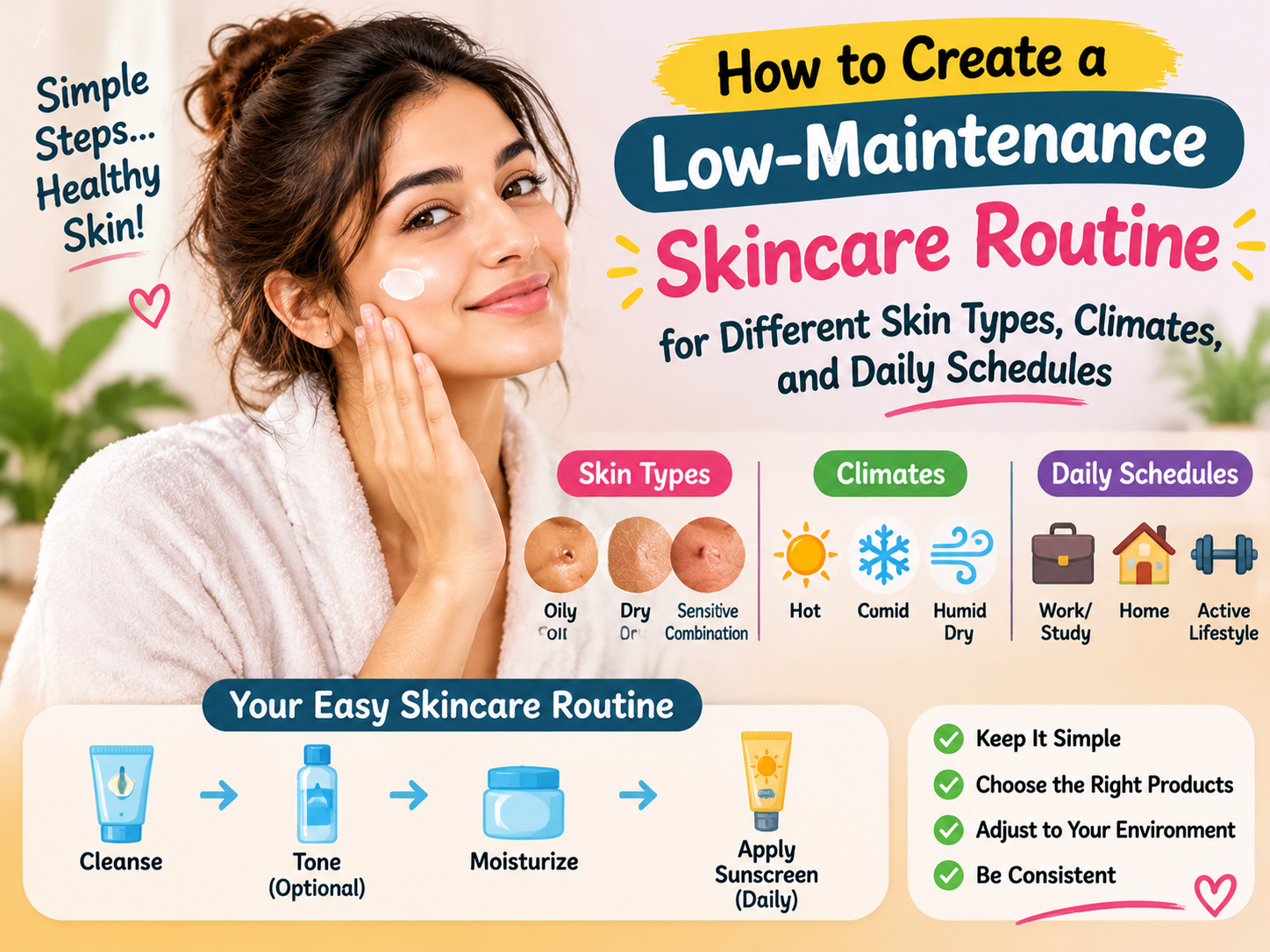

How to Create a Low-Maintenance Skincare Routine for Different Skin Types, Climates, and Daily Schedules
A good skincare routine does not need ten products, complicated layering, or a separate treatment for every small skin concern. For most people, the foundation is much simpler: cleanse without stripping the skin, moisturise according to its needs, and protect it from ultraviolet (UV) radiation. The challenge is choosing products and habits that suit your skin type, the weather where you live, and the time you can consistently set aside.
A routine that works in a cool, dry winter may feel too heavy during a humid summer. Similarly, someone with oily, acne-prone skin may need a different moisturiser texture from someone whose skin feels tight and flaky after washing. A person who works outdoors also has different sun-protection needs from someone who spends most of the day inside.
The most effective low-maintenance skincare routine is therefore not a universal product list. It is a small, adaptable system built around your skin’s condition and daily environment. This guide explains how to identify your skin type, choose essential products, adjust your routine for different climates, and maintain healthy skincare habits even when your schedule is busy.
Table of Contents
What Is a Low-Maintenance Skincare Routine?
A low-maintenance skincare routine is a practical approach that uses a limited number of suitable products to support the skin barrier, manage common concerns, and protect against environmental damage. Its purpose is to make skincare sustainable rather than turn it into a lengthy daily task.
For many people, three basic steps provide a useful starting point:
- Cleanse to remove sweat, excess oil, sunscreen, makeup, and everyday debris.
- Moisturise to support hydration and reduce water loss from the skin.
- Apply sunscreen to protect exposed skin from ultraviolet radiation.
The American Academy of Dermatology (AAD) recommends a simple approach built around cleansing, moisturising, and sun protection. Its guidance on skincare on a budget also explains that limiting the number of products can reduce unnecessary expense and the risk of irritation associated with using too many products.
A longer routine is not automatically more effective. Adding several exfoliating acids, retinoids, toners, masks, and serums without a clear reason can make it harder to identify what is helping and what is irritating the skin. A simpler routine also makes it easier to remain consistent.
Low-maintenance does not mean ignoring persistent acne, eczema, rosacea, pigmentation, or other medical skin conditions. These may require targeted treatment or professional assessment. The goal is to keep everyday care manageable while addressing specific problems appropriately.
Step One: Identify Your Skin Type Before Choosing Products
The first step in building a suitable routine is understanding how your skin behaves. Product labels can be useful, but your skin’s response to cleansing, moisturising, and changes in weather is more informative than marketing claims.
Normal Skin
Normal skin generally feels comfortable after cleansing and does not remain excessively oily or dry. It may still experience occasional breakouts, sensitivity, or seasonal dryness, but it does not consistently show the characteristics of very oily or very dry skin.
A gentle cleanser, lightweight moisturiser, and broad-spectrum sunscreen are usually sufficient for basic daily care. There is no need to add active ingredients simply because they are popular.
Oily and Acne-Prone Skin
Oily skin produces more sebum, the natural oil that helps protect the skin. Excess sebum, together with dead skin cells and other factors, can contribute to clogged pores and acne.
A common mistake is trying to remove all oil with strong cleansers, alcohol-based toners, or repeated washing. This can irritate the skin without solving the underlying cause of breakouts.
Choose a gentle cleanser and look for moisturisers and sunscreens labelled oil-free or non-comedogenic. These terms indicate that the products are formulated to be less likely to clog pores. A light lotion or gel moisturiser may feel more comfortable than a thick cream.
If acne is a concern, ingredients such as salicylic acid or benzoyl peroxide may be useful for some people. However, they are not essential to every routine and can cause dryness or irritation. Introduce a targeted acne treatment carefully, follow its directions, and seek medical advice if acne is persistent, painful, scarring, or affecting your confidence.
Dry Skin
Dry skin may feel tight, rough, flaky, or uncomfortable, particularly after washing or exposure to cold air. It can also become more noticeable during winter or in heated indoor environments.
A gentle, fragrance-free cleanser and a richer moisturiser are often more appropriate than foaming products that leave the skin feeling stripped. Creams and ointments generally provide more substantial moisture than lightweight lotions.
Look for moisturising ingredients such as glycerin, hyaluronic acid, dimethicone, petrolatum, mineral oil, or shea butter. Applying moisturiser while the skin is still slightly damp after washing or bathing can help retain water.
If dryness is accompanied by persistent itching, cracking, bleeding, or a rash, it may be more than ordinary dryness. Conditions such as eczema or contact dermatitis can require medical treatment.
Combination Skin
Combination skin typically has more oil around the forehead, nose, and chin, while the cheeks or other areas feel normal or dry. This means that applying the same amount of product everywhere may not be comfortable.
A gentle cleanser and a light moisturiser can work as a starting point. Apply a little more moisturiser to dry areas and avoid layering unnecessarily heavy products over oily areas. You can also use different moisturiser textures on different parts of the face if needed.
Sensitive Skin
Sensitive skin is more likely to sting, burn, itch, or become red after using certain products or being exposed to environmental triggers. Sensitivity is not always a separate skin type; it can occur alongside oily, dry, or combination skin.
Choose fragrance-free products and avoid introducing several new ingredients at once. Fragrance-free is not necessarily the same as unscented: an unscented product may still contain ingredients used to mask an odour.
The AAD recommends testing new skincare products on a small area of skin before using them regularly. Its guidance suggests applying the product to a test area twice daily for seven to ten days, following the product’s normal use instructions. Stop using it if a reaction develops.
Step Two: Build a Simple Morning Skincare Routine
A morning routine should prepare the skin for the day without requiring unnecessary steps. For most people, the essentials are cleansing when needed, moisturising, and applying sunscreen.
1. Cleanse Gently
Use a mild, non-abrasive cleanser and lukewarm water. Apply it with your fingertips rather than scrubbing with a rough cloth or cleansing brush. Rinse thoroughly and pat the skin dry.
The AAD generally advises washing the face up to twice daily and after heavy sweating. People with dry or sensitive skin may find that a gentle water rinse in the morning and a proper cleanse at night is more comfortable.
If your skin feels tight, irritated, or unusually dry after cleansing, consider whether the cleanser is too harsh or whether you are washing too frequently.
2. Apply Moisturiser
Moisturiser helps reduce water loss and supports the skin barrier. Choose a texture that suits your skin: a light gel or lotion for many oily skin types, a regular lotion or cream for normal and combination skin, and a richer cream or ointment for dry skin.
People with acne-prone skin do not necessarily need to avoid moisturiser. The AAD notes that acne treatments such as benzoyl peroxide and topical retinoids can dry and irritate the skin, making an appropriate moisturiser useful as part of an acne-care plan.
If you use a separate serum or prescribed topical treatment, follow the product instructions or your clinician’s directions for application order. There is no need to add a serum simply to make the routine appear more complete.
3. Apply Broad-Spectrum Sunscreen
Sunscreen is one of the most important steps in a daytime skincare routine. Choose a broad-spectrum product that protects against both UVA and UVB radiation. The AAD recommends SPF 30 or higher and water resistance when appropriate.
SPF measures protection against UVB-related sunburn under test conditions; it does not mean that a product provides complete protection or that you can stay in the sun indefinitely. The AAD reports that SPF 30 blocks approximately 97% of UVB rays when used as directed. No sunscreen blocks 100% of UVB radiation.
Apply sunscreen generously to exposed skin before going outdoors and follow the product label. The AAD advises reapplying approximately every two hours when outdoors, and after swimming or sweating. A water-resistant label commonly specifies protection for either 40 or 80 minutes during water exposure; it does not mean waterproof.
Remember the neck, ears, hairline, and other exposed areas. Hats, shade, and protective clothing should complement sunscreen rather than be replaced by it.
Step Three: Keep Your Evening Routine Simple
The evening routine is an opportunity to remove the day’s sunscreen, makeup, sweat, and accumulated debris, then support the skin’s moisture barrier overnight.
Start with a gentle cleanser. If you wear makeup or water-resistant sunscreen, use a suitable makeup remover or cleansing product first when necessary, then cleanse without scrubbing. Avoid going to bed with makeup on.
Apply a moisturiser suited to your skin type. If you have a prescribed acne treatment or another dermatologist-recommended product, use it as directed. Do not layer several strong active ingredients simply because they are labelled as anti-ageing, brightening, or pore-refining.
Retinoids, exfoliating acids, and acne treatments can be useful for particular concerns, but they are not mandatory parts of a basic routine. Retinoids can cause dryness and irritation, especially when introduced too frequently. The AAD advises that retinoids should not be used during pregnancy; anyone who is pregnant, trying to become pregnant, or breastfeeding should discuss suitable skincare treatments with a qualified healthcare professional.
For a genuinely low-maintenance routine, consistency with the basics is more valuable than frequently changing products.
How to Adjust Your Skincare Routine for Different Climates
Climate affects how comfortable products feel and how much attention the skin may need. Temperature alone does not tell the whole story. Humidity, wind, indoor heating, air conditioning, sunlight, and time spent outdoors all influence everyday skincare decisions.
Hot and Humid Climates
In hot, humid conditions, sweat and sebum can make heavy creams feel uncomfortable. Some people also experience more visible shine or breakouts during periods of heat.
Choose a gentle cleanser and a lightweight, non-comedogenic moisturiser if a richer product feels too heavy. Gel and light lotion textures may be easier to use consistently. However, do not assume that humidity means your skin does not need moisturiser. If it feels tight or irritated, adjust the product rather than automatically removing the moisturising step.
Sunscreen remains essential when UV exposure is present. If you sweat heavily or spend time outdoors, choose a water-resistant broad-spectrum sunscreen and reapply according to its label. After heavy sweating, gently cleanse or rinse when practical, particularly if sweat and friction are irritating your skin.
Hot and Dry Climates
Hot, dry weather combines heat with low humidity, which can leave some skin feeling dehydrated or uncomfortable. Air conditioning may add to the problem by making indoor environments feel dry.
Use a gentle cleanser, apply moisturiser after washing, and choose a formula that provides enough comfort without feeling unpleasant in the heat. Creams containing ingredients such as glycerin or dimethicone may be useful for dryness, while petroleum-based products can help protect particularly dry areas.
Sun protection is especially important when outdoor exposure is high. Use sunscreen alongside shade, suitable clothing, and a hat. Do not rely on a cloudy sky or a cooler temperature as proof that UV exposure is low.
Cold and Dry Climates
Cold air, wind, and indoor heating can contribute to dryness and irritation. A routine that felt comfortable in summer may no longer provide enough moisture.
Consider switching from a lightweight lotion to a cream if your skin becomes tight or flaky. Keep showers short and use warm rather than hot water. The AAD recommends limiting baths and showers to approximately five to ten minutes when managing dry skin, using a gentle cleanser, and applying moisturiser immediately afterwards.
Avoid aggressive exfoliation when skin is visibly dry or peeling. Scrubbing away flakes can worsen irritation rather than restore a healthy skin surface.
Sunscreen still matters during winter, especially when spending time outdoors or when snow and other reflective surfaces increase exposure. Choose protection based on UV conditions and outdoor activity, not simply the season.
Air-Conditioned and Indoor Environments
Spending most of the day indoors does not automatically remove the need for skincare. Air conditioning and indoor heating can make skin feel dry, while people who sit near windows or travel outdoors may still receive UV exposure.
Keep a moisturiser that suits your skin at home or work if dryness is a recurring problem. Apply sunscreen to exposed skin when daytime UV exposure is relevant, and consider window exposure and your daily commute when deciding how to maintain protection.
There is no need to repeatedly cleanse your face just because you have been in an air-conditioned room. Over-cleansing can make dryness and irritation worse.
Use the UV Index to Make Sun Protection More Practical
Rather than treating every day as identical, check the local UV Index when planning outdoor activities. The World Health Organization (WHO) recommends sun-protection measures when the UV Index reaches 3 or above.
The WHO describes the UV Index as an indicator of the potential for UV-related damage. Its guidance advises seeking shade, wearing protective clothing, and using sunscreen when the index is in the moderate-to-higher range. At a UV Index of 8 or above, it recommends avoiding outdoor exposure during the strongest midday period where possible and taking extra precautions.
This is a useful way to make skincare more responsive to your environment. Someone commuting briefly in the morning may have different practical exposure from someone working outdoors for several hours. Both should understand their local UV conditions and use protection appropriate to their exposure.
For people concerned about dark spots or uneven pigmentation, consistent sun protection is particularly important. The AAD notes that tinted sunscreens containing iron oxides can provide additional protection against visible light that may contribute to dark spots in some people.
How to Adapt Your Routine to a Busy Daily Schedule
A routine only works if it fits into real life. If you have a demanding job, school, childcare responsibilities, shift work, or frequent travel, a complicated skincare plan is likely to become inconsistent.
The Two-Minute Morning Routine
When time is limited, focus on the essentials. Cleanse gently if needed, apply moisturiser if your skin requires it, and finish with broad-spectrum sunscreen. If you prefer fewer products, a moisturiser with SPF may be convenient, but check that it offers broad-spectrum protection and that you apply enough to achieve the labelled protection. Many people apply too little product, so combining moisturiser and sunscreen does not remove the need for adequate application.
The Evening Routine for Tired Days
At night, prioritise removing makeup and sunscreen, then moisturise. A basic cleanser and moisturiser kept together near your usual washing area can make the routine easier to complete.
If you use a prescribed topical treatment, follow your clinician’s instructions. Do not skip or change a medical treatment schedule without discussing it with the person who prescribed it.
The Routine for People Who Exercise
Sweat, friction, and tight sports equipment can irritate some people’s skin. Cleanse gently after heavy sweating when practical, change out of damp clothing, and avoid scrubbing to remove sweat. If you exercise outdoors, plan sunscreen application before the activity and reapplication according to exposure, sweating, and the product label.
The Routine for Frequent Travellers
Travel can involve different humidity levels, long periods in air-conditioned transport, and increased sun exposure. Keep the routine familiar rather than buying several new products for every destination.
A practical travel kit can include a small gentle cleanser, moisturiser, and sunscreen that meet airline and destination requirements. If your skin is sensitive, avoid testing multiple new products while travelling, when it may be difficult to identify the cause of a reaction.
Which Skincare Ingredients Are Worth Prioritising?
A low-maintenance routine does not require a long ingredient list. It is more useful to understand a few common ingredient categories and choose products according to a specific need.
Humectants such as glycerin and hyaluronic acid help attract and hold water in the outer layers of the skin. They are often included in moisturisers designed to improve hydration.
Emollients help soften and smooth the skin. Ingredients such as dimethicone and certain plant-derived oils can improve the feel of dry or rough skin.
Occlusive ingredients such as petrolatum help reduce water loss by forming a protective layer on the skin. They can be useful for very dry areas, although some people may find heavier textures uncomfortable on the face.
Salicylic acid is used in some products for acne-prone skin because it helps address clogged pores. Benzoyl peroxide is another established acne-treatment ingredient. Both can irritate or dry the skin, so they should be introduced thoughtfully rather than combined indiscriminately.
Retinoids are used for certain acne and photoageing concerns, but they are not necessary for everyone. They can cause irritation and require appropriate use and sun protection. Seek professional guidance before starting a treatment if you have a skin condition, are using prescription products, or are pregnant or breastfeeding.
The best ingredient is not the one with the most impressive marketing description. It is the one that addresses a real concern, suits your skin, and can be used safely and consistently.
Common Skincare Mistakes That Make Routines Harder
One frequent mistake is using too many products at once. When several new cleansers, serums, exfoliants, and treatments are introduced together, it becomes difficult to identify which product is causing a reaction. A simpler routine makes changes easier to evaluate.
Another mistake is washing the face repeatedly to remove oil. The AAD advises gentle cleansing rather than scrubbing and generally recommends washing up to twice daily and after sweating. More washing is not necessarily better.
Skipping moisturiser because the skin is oily is also a common misconception. Oily skin can still become dehydrated or irritated, particularly when acne treatments are being used. A light, non-comedogenic moisturiser may be more comfortable.
Some people also treat sunscreen as a holiday-only product. UV exposure is not limited to beach days or visibly hot weather. The WHO recommends sun protection when the UV Index is 3 or higher, and the AAD advises broad-spectrum sunscreen, shade, and protective clothing as part of sun safety.
Finally, changing products every few days can make it harder to judge whether a routine is working. Give ordinary skincare changes time, while stopping a product promptly if it causes a significant reaction. Persistent or severe symptoms should be assessed rather than managed through endless product experimentation.
How Long Does It Take to See Results From a Skincare Routine?
The time needed to notice a difference depends on the concern being addressed and the products being used. Moisturiser may make dry skin feel more comfortable relatively quickly, while acne treatments and products intended to improve uneven skin tone may take longer.
For acne, the AAD advises that it can take six to eight weeks to see some improvement after starting a treatment, while more complete clearing may take three to four months. These timeframes are not a guarantee and may differ depending on the type and severity of acne and the treatment used.
A useful way to assess a low-maintenance routine is to look for practical improvements: less tightness after washing, fewer episodes of irritation, a comfortable moisturiser texture, and consistent sun protection. If a skin condition is worsening or not responding, a dermatologist can help identify whether a different treatment is needed.
When Should You Consult a Dermatologist?
Basic skincare can support everyday skin health, but it cannot diagnose or treat every skin condition. Arrange a professional assessment if you have persistent or worsening acne, painful nodules, scarring, recurring rashes, unexplained itching, or dryness that cracks or bleeds.
You should also seek medical advice if a new or changing skin lesion concerns you, or if a product causes significant swelling, blistering, pain, or a widespread reaction. Severe allergic symptoms, particularly breathing difficulty or swelling of the lips or tongue, require urgent medical attention.
A dermatologist can assess whether symptoms are related to acne, eczema, rosacea, contact dermatitis, infection, or another condition. They can also recommend a treatment plan that fits your skin and reduces unnecessary product use.
A Practical Low-Maintenance Skincare Routine by Skin Type
The following table is a starting point, not a diagnosis or a substitute for individual medical advice.
| Skin type | Morning approach | Evening approach |
| Normal | Gentle cleanse as needed, light moisturiser if needed, broad-spectrum SPF 30+ | Gentle cleanse, moisturiser |
| Oily or acne-prone | Gentle cleanser, lightweight non-comedogenic moisturiser, broad-spectrum SPF 30+ | Cleanse, moisturiser, targeted acne treatment if appropriate |
| Dry | Gentle cleanse or water rinse, richer moisturiser, broad-spectrum SPF 30+ | Gentle cleanse, cream or ointment moisturiser |
| Combination | Gentle cleanser, light moisturiser adjusted by area, broad-spectrum SPF 30+ | Cleanse, moisturise dry areas as needed |
| Sensitive | Fragrance-free gentle cleanser, suitable moisturiser, tolerated broad-spectrum SPF 30+ | Gentle cleanse, fragrance-free moisturiser |
The routine can be adjusted seasonally. For example, someone with combination skin may prefer a light lotion in humid weather and a richer cream on dry areas during winter. Someone with oily skin may still need more moisturiser when using a drying acne treatment.
Final Thoughts: Consistency Matters More Than Complexity
Creating a low-maintenance skincare routine is about choosing a few appropriate steps and repeating them consistently. Start with a gentle cleanser, a moisturiser that suits your skin type, and broad-spectrum sunscreen. Then adjust product textures and habits according to humidity, temperature, UV exposure, exercise, and the demands of your schedule.
Avoid adding active ingredients unless they address a specific concern. Introduce new products gradually, pay attention to irritation, and seek professional advice when symptoms persist or suggest a medical skin condition.
The most useful skincare routine is not the longest or most expensive one. It is the routine that protects your skin, fits your environment, and is realistic enough to maintain.
Frequently Asked Questions
1. What is the simplest skincare routine for everyday use?
A simple routine consists of gentle cleansing, moisturising, and applying broad-spectrum sunscreen during the day. At night, remove sunscreen and makeup, cleanse gently, and moisturise. Additional treatments are optional and should address a specific skin concern.
2. How many skincare products do I really need?
Many people can begin with three core products: a gentle cleanser, a suitable moisturiser, and sunscreen. You may need additional products for acne, pigmentation, eczema, or another concern, but a larger product collection is not automatically more effective.
3. Should I moisturise if I have oily skin?
Yes, if your skin needs it. Oily skin can still become dry or irritated, particularly when using acne treatments. Choose a lightweight moisturiser labelled oil-free or non-comedogenic if heavier products feel uncomfortable.
4. What is the best skincare routine for dry skin?
Use a gentle, fragrance-free cleanser, avoid very hot water, and apply a cream or ointment moisturiser while the skin is slightly damp. Use broad-spectrum sunscreen during daytime exposure. Persistent cracking, itching, or inflammation should be assessed by a healthcare professional.
5. How should I change my skincare routine in summer?
In hot or humid weather, you may prefer lighter moisturiser textures and a cleanser that removes sweat and excess oil without stripping the skin. Continue using broad-spectrum sunscreen, and choose a water-resistant formula when swimming or sweating.
6. Do I need a different skincare routine in winter?
You may need to use a richer moisturiser if cold air, wind, or indoor heating makes your skin dry. Keep cleansing gentle, use warm rather than hot water, and continue sun protection when UV exposure warrants it.
7. Is sunscreen necessary if I spend most of the day indoors?
It depends on your exposure. People who spend time outdoors during commutes, breaks, or work still need appropriate sun protection. Window exposure and local UV conditions may also matter. Check the UV Index and use shade, clothing, and sunscreen as appropriate.
8. How often should I wash my face?
The AAD generally recommends washing up to twice daily and after heavy sweating. Use a gentle cleanser and lukewarm water. If your skin is dry or sensitive, a water rinse in the morning and gentle cleansing at night may be more comfortable.
9. Can I use the same skincare products throughout the year?
Often, yes, but you may need to adjust the texture or frequency of certain products as the weather changes. For example, a richer moisturiser may be more comfortable in winter, while a lighter lotion may suit humid conditions.
10. What does non-comedogenic mean?
Non-comedogenic means a product is formulated to be less likely to clog pores. It can be a useful label for people with oily or acne-prone skin, although it does not guarantee that a product will suit every individual.
11. Are expensive skincare products more effective?
Not necessarily. Product price does not establish clinical effectiveness. A suitable, well-formulated cleanser, moisturiser, and sunscreen can provide a practical foundation without requiring an expensive multi-step routine.
12. How long should I wait before changing a skincare product?
For a non-irritating product, allow enough time to assess its effect rather than changing products every few days. Acne treatments may take six to eight weeks to show some improvement, according to the AAD. Stop a product if it causes a significant reaction, and seek professional advice when needed.
13. How can I make skincare easier when I have a busy schedule?
Keep your core products together, use a short morning routine, and make evening cleansing and moisturising a consistent habit. Travel-sized versions of familiar products can help maintain the routine away from home.
14. Is exfoliation necessary for healthy skin?
No. Exfoliation is not essential for everyone. Some people may benefit from a suitable exfoliating product, but frequent or aggressive exfoliation can irritate the skin. If your skin is dry, peeling, or sensitive, prioritise gentle cleansing and moisturising.
15. When should I see a dermatologist instead of changing products?
Seek professional advice for persistent acne, painful breakouts, scarring, recurring rashes, ongoing itching, severe dryness, or a concerning new or changing skin lesion. A dermatologist can identify the cause and recommend appropriate treatment rather than relying on trial and error.
if you are looking to write about lifestyle. You can search for us with the query “Write for Us Lifestyle” in search engines.
For more updates and the latest lifestyle news, visit StyleInFlux.